
Stock Trading Guide for Beginners and Pros
Stock Trading Guide for Beginners and Pros
Stock trading is one of the most popular ways to grow wealth in today’s financial world. Whether you are a beginner or someone looking to refine your approach, understanding stock trading is essential before putting your money at risk. Many people enter the market with high expectations, but without proper knowledge, they often face losses instead of gains.
At its core, stock trading means buying and selling shares of companies in financial markets. The goal is simple: buy low and sell high. However, the process is not as easy as it sounds. Prices move based on many factors, including economic data, company performance, and investor sentiment. This makes stock trading both exciting and challenging.
In this guide, you will learn everything you need to know about stock trading. We will cover the basics, key strategies, common mistakes, and how to build a strong foundation. By the end, you will have a clear understanding of how to approach the market with confidence and discipline.
What Is Stock Trading?
Stock trading refers to the act of buying and selling shares of publicly listed companies. These shares represent ownership in a company. When you buy a stock, you own a small piece of that business.
There are two main ways people make money from stock trading:
First, through price appreciation. This happens when the value of a stock increases after you buy it. Second, through dividends. Some companies share their profits with investors in the form of regular payments.
Stock trading takes place on exchanges such as the New York Stock Exchange (NYSE) and Nasdaq. These platforms connect buyers and sellers and ensure fair pricing through supply and demand.
There are different types of traders in the market:
- Day traders: They buy and sell stocks within the same day.
- Swing traders: They hold stocks for several days or weeks.
- Position traders: They keep stocks for months or even years.
Each type has its own strategy, risk level, and time commitment. Choosing the right style depends on your goals and personality.
How the Stock Market Works
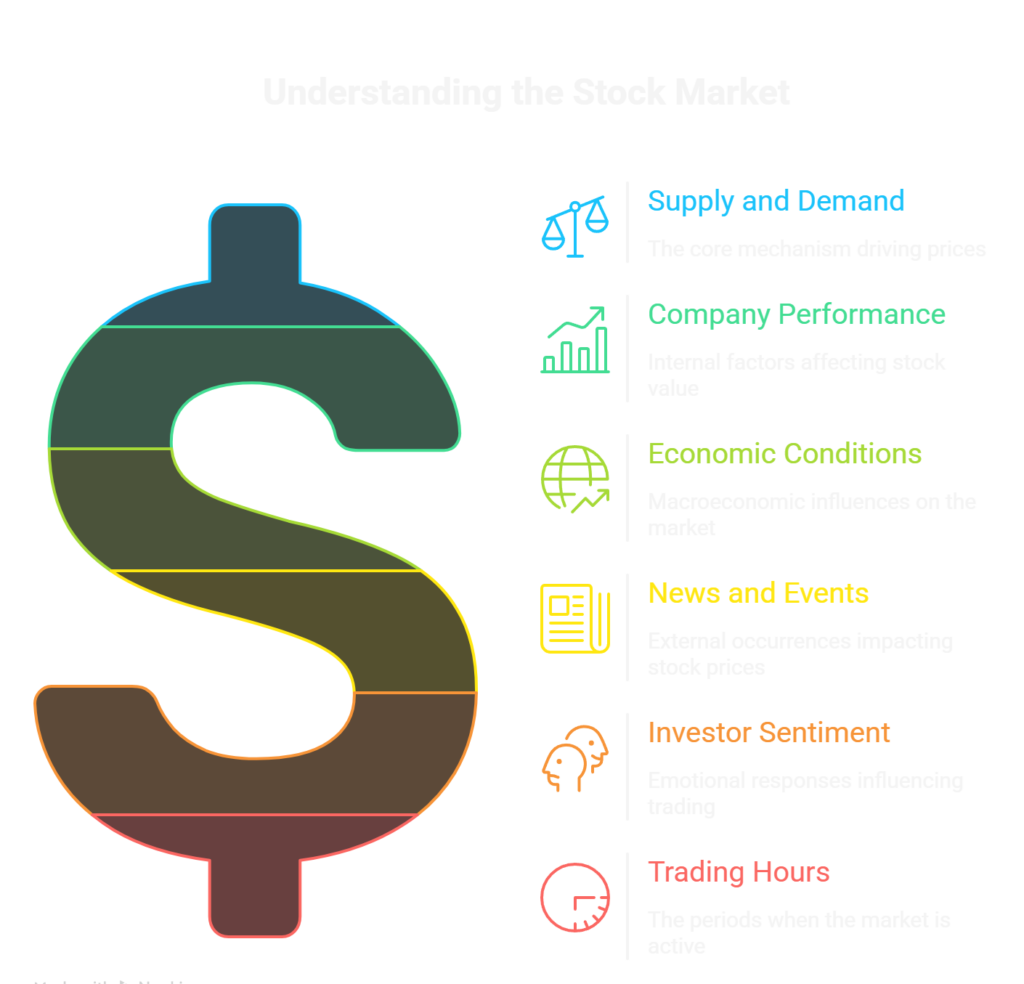
To succeed in stock trading, you must understand how the market operates. The stock market is driven by supply and demand. When more people want to buy a stock, its price goes up. When more people want to sell, the price goes down.
Several key factors influence stock prices:
- Company Performance
Earnings reports, revenue growth, and management decisions all affect stock prices. Strong performance usually leads to higher prices.
- Economic Conditions
Interest rates, inflation, and employment data impact the entire market. For example, higher interest rates often lead to lower stock prices.
- News and Events
Global events, political changes, and industry news can cause sudden price movements. Traders must stay informed to react quickly.
- Investor Sentiment
Sometimes prices move based on emotions rather than facts. Fear and greed play a major role in stock trading.
The market operates during specific hours, depending on the exchange. However, with modern technology, traders can also access pre-market and after-hours sessions.
Types of Stock Trading Strategies
There is no single way to succeed in stock trading. Different strategies work for different people. Below are some of the most common approaches:
Day Trading
Day trading involves opening and closing positions within the same day. Traders aim to profit from small price movements. This method requires quick decision-making and constant attention.
Swing Trading
Swing trading focuses on short-term trends. Traders hold positions for a few days or weeks. This approach balances time commitment and potential profit.
Scalping
Scalping is a fast-paced strategy. Traders make many small trades throughout the day. The goal is to capture tiny price changes repeatedly.
Position Trading
Position traders take a long-term view. They rely on fundamental analysis and hold stocks for months or years.
Momentum Trading
This strategy involves buying stocks that are moving strongly in one direction. Traders ride the trend until it shows signs of reversal.
Each strategy has pros and cons. It is important to test and find what suits your risk tolerance and lifestyle.
Tools and Platforms for Stock Trading
Modern stock trading relies heavily on technology. Choosing the right tools can make a big difference in your performance.
Trading Platforms
A trading platform is where you buy and sell stocks. Good platforms offer fast execution, real-time data, and user-friendly interfaces.
Charting Tools
Charts help traders analyze price movements. Common types include line charts, bar charts, and candlestick charts. These tools are essential for technical analysis.
News Feeds
Real-time news helps traders stay updated. Market-moving events can happen at any time, so quick access to information is crucial.
Stock Screeners
Screeners allow you to filter stocks based on specific criteria. For example, you can search for stocks with high growth or low risk.
Mobile Apps
Many traders use mobile apps to manage trades on the go. These apps provide flexibility and convenience.
Using the right combination of tools can improve decision-making and reduce errors.
Fundamental vs Technical Analysis
Two main methods guide decisions in stock trading: fundamental analysis and technical analysis.
Fundamental Analysis
This approach focuses on a company’s financial health. Traders look at:
- Revenue and earnings
- Debt levels
- Industry position
- Management quality
The goal is to find undervalued stocks with strong growth potential.
Technical Analysis
Technical analysis studies price charts and patterns. Traders use indicators such as:
- Moving averages
- RSI (Relative Strength Index)
- MACD (Moving Average Convergence Divergence)
This method helps identify entry and exit points.
Many successful traders combine both approaches. This provides a more complete view of the market.
Risk Management in Stock Trading
Risk management is one of the most important aspects of stock trading. Without it, even the best strategy can fail.
Set Stop-Loss Orders
A stop-loss limits your losses by automatically selling a stock at a certain price.
Diversify Your Portfolio
Do not put all your money into one stock. Spread your investments across different sectors.
Use Proper Position Sizing
Only risk a small percentage of your capital on each trade. This protects your account from large losses.
Control Emotions
Fear and greed can lead to poor decisions. Stick to your plan and avoid impulsive actions.
Keep a Trading Journal
Recording your trades helps you learn from mistakes and improve over time.
Good risk management ensures long-term survival in the market.
Common Mistakes in Stock Trading
Many beginners make similar mistakes in stock trading. Avoiding these can save you time and money.
One common mistake is overtrading. Taking too many trades increases costs and risk. Another mistake is chasing trends without proper analysis. This often leads to buying at the top.
Lack of a clear strategy is also a major issue. Without a plan, decisions become random and inconsistent.
Ignoring risk management can quickly wipe out your account. Many traders focus only on profits and forget about protecting their capital.
Lastly, relying on tips or rumors instead of doing your own research is risky. Always base your decisions on data and analysis.
Advanced Stock Trading Strategies
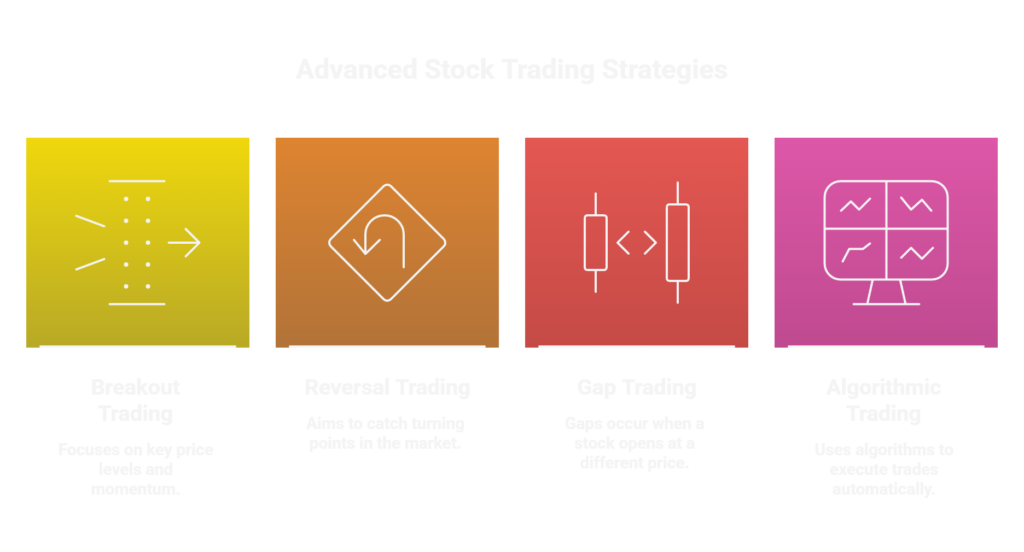
Stock trading becomes more complex as you gain experience. Basic strategies help you start, but advanced techniques can improve your consistency and edge in the market. These methods require deeper knowledge, patience, and discipline.
Breakout Trading
Breakout trading focuses on key price levels. When a stock moves above resistance or below support, it often continues in that direction. Traders enter the trade at the breakout point and ride the momentum.
The key to success in breakout trading is volume. A strong breakout usually comes with high trading volume. Without it, the move may fail and reverse.
Reversal Trading
Reversal trading aims to catch turning points in the market. Traders look for signs that a trend is ending and a new one is starting.
Common signals include:
- Divergence in indicators
- Overbought or oversold conditions
- Strong support or resistance levels
This strategy can be profitable but risky. Timing is critical, and false signals are common.
Gap Trading
Gaps occur when a stock opens at a different price than its previous close. This often happens due to news or earnings reports.
There are two main approaches:
- Gap and go: Trade in the direction of the gap
- Gap fill: Expect the price to return and fill the gap
Understanding the context behind the gap is essential before entering a trade.
Algorithmic and Quantitative Trading
Some traders use algorithms to execute trades automatically. These systems analyze data and place trades based on predefined rules.
While this approach can reduce emotional decisions, it requires programming knowledge and thorough testing.
Trading Psychology: The Hidden Key to Success
Many traders underestimate the role of psychology in stock trading. In reality, emotions are one of the biggest reasons traders fail.
Fear and Greed
Fear can cause you to exit trades too early. Greed can push you to hold positions longer than you should. Both emotions lead to poor decisions.
Overconfidence
After a few successful trades, some traders become overconfident. This often leads to taking unnecessary risks and ignoring rules.
Revenge Trading
Trying to recover losses quickly is a dangerous habit. It usually results in even bigger losses.
Discipline and Patience
Successful stock trading requires discipline. You must follow your plan and wait for the right opportunities. Not every moment is a good time to trade.
Developing emotional control takes time. Many professional traders say psychology is more important than strategy.
Building a Trading Plan
A solid trading plan is essential for consistent results in stock trading. Without a plan, your actions will be based on emotions rather than logic.
Define Your Goals
Start by setting clear and realistic goals. Are you looking for short-term profits or long-term growth?
Choose Your Strategy
Select a trading style that matches your personality and schedule. Do not switch strategies frequently.
Set Entry and Exit Rules
Know exactly when to enter and exit a trade. This removes guesswork and improves consistency.
Risk Management Rules
Decide how much you are willing to risk on each trade. Stick to this rule at all times.
Review and Improve
Regularly review your trades. Identify what works and what does not. Continuous improvement is key to success.
A well-defined plan acts as a roadmap. It keeps you focused and reduces emotional decisions.
Understanding Market Trends
Recognizing trends is a crucial skill in stock trading. Trends show the general direction of the market.
Uptrend
An uptrend is characterized by higher highs and higher lows. Traders look for buying opportunities in this trend.
Downtrend
A downtrend shows lower highs and lower lows. Traders may look for selling or shorting opportunities.
Sideways Market
In a sideways market, prices move within a range. This can be challenging for trend-following strategies.
Trend Indicators
Common tools used to identify trends include:
- Moving averages
- Trendlines
- MACD
Trading with the trend increases your chances of success. Fighting the trend often leads to losses.
The Role of News and Economic Data
Stock trading is heavily influenced by news and economic events. Understanding these factors can give you an edge.
Earnings Reports
Companies release earnings reports quarterly. These reports can cause large price movements.
Interest Rates
Central banks control interest rates. Changes in rates affect borrowing costs and market sentiment.
Inflation Data
High inflation can reduce consumer spending and impact company profits.
Global Events
Political instability, wars, and global crises can create volatility in the market.
Traders must stay informed. Ignoring news can lead to unexpected losses.
Risk vs Reward: The Core Principle
Every trade in stock trading involves risk and reward. Understanding this balance is essential.
Risk-Reward Ratio
This ratio compares potential profit to potential loss. A common rule is to aim for at least 1:2. This means risking $1 to make $2.
Win Rate vs Profitability
A high win rate does not guarantee success. What matters is the overall profitability.
For example:
- Winning 40% of trades with a high reward can still be profitable
- Winning 70% with small gains but large losses can fail
Managing Drawdowns
Drawdowns are periods of loss. Every trader experiences them. The goal is to keep them small and recover quickly.
Understanding risk helps you stay in the game long enough to succeed.
Choosing the Right Stocks
Not all stocks are suitable for trading. Selecting the right ones can improve your performance.
Liquidity
Highly liquid stocks are easier to buy and sell. They also have tighter spreads.
Volatility
Volatility creates opportunities. However, too much volatility can increase risk.
Market Sector
Different sectors perform differently based on economic conditions. For example, tech stocks may grow faster, while utilities are more stable.
Market Capitalization
Large-cap stocks are generally more stable. Small-cap stocks can offer higher growth but come with more risk.
Choosing the right stocks is a key part of successful stock trading.
Backtesting and Practice
Before risking real money, it is important to test your strategy.
Backtesting
Backtesting involves applying your strategy to historical data. This helps you see how it would have performed in the past.
Paper Trading
Paper trading allows you to practice without real money. It is a great way to build confidence.
Continuous Learning
Markets change over time. Staying updated and learning new techniques is essential.
Practice reduces mistakes and builds confidence.
Stock Trading vs Long-Term Investing
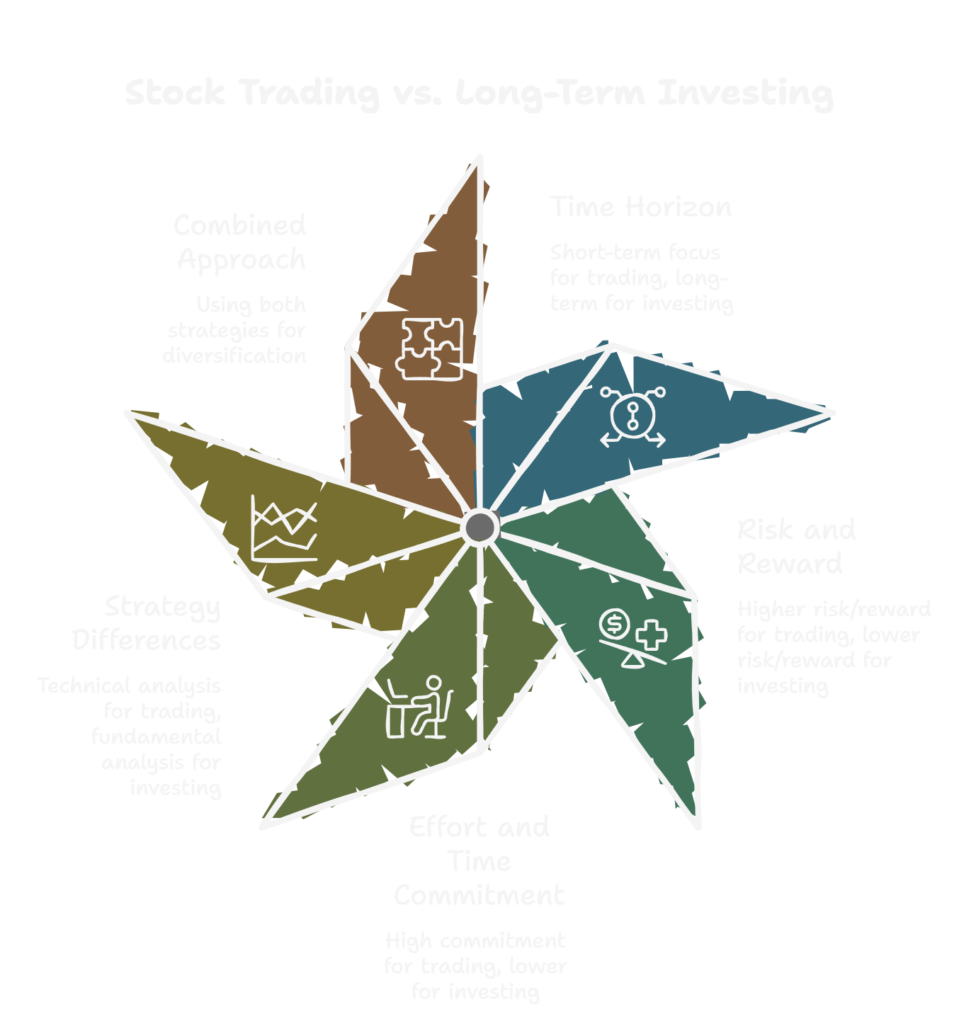
Stock trading and long-term investing are often confused, but they are very different approaches. Understanding these differences helps you choose the right path based on your goals, time, and risk tolerance.
Time Horizon
Stock trading focuses on short-term price movements. Trades can last from minutes to weeks. In contrast, long-term investing involves holding stocks for years, sometimes decades.
Risk and Reward
Stock trading can offer quick profits, but it also comes with higher risk. Prices can move rapidly, and losses can occur just as fast. Long-term investing is generally more stable, as it relies on the overall growth of companies and the economy.
Effort and Time Commitment
Stock trading requires constant monitoring of the market. Traders often spend hours analyzing charts and news. Long-term investors, however, can spend less time managing their portfolios.
Strategy Differences
Traders rely heavily on technical analysis and short-term trends. Investors focus more on fundamentals, such as company earnings and long-term growth potential.
Both approaches can be profitable. Some people even combine them, using a portion of their capital for stock trading and the rest for long-term investments.
How to Build a Sustainable Trading Career
Turning stock trading into a consistent income source is possible, but it requires a structured approach. Many beginners expect quick success, but professional traders know that consistency takes time.
Start Small
Begin with a small amount of capital. This reduces risk while you learn and refine your strategy.
Focus on Process, Not Profit
Instead of chasing money, focus on executing your strategy correctly. Profits will follow if your process is solid.
Develop a Routine
Successful traders follow a daily routine. This includes market analysis, reviewing trades, and planning for the next session.
Track Performance
Keep detailed records of your trades. Analyze your results to identify strengths and weaknesses.
Scale Gradually
As you gain confidence and consistency, you can slowly increase your position sizes. Avoid sudden jumps in risk.
Building a trading career is similar to running a business. It requires planning, discipline, and continuous improvement.
Taxes and Legal Considerations
Many traders overlook taxes, but they are an important part of stock trading. Understanding your tax obligations can help you avoid surprises.
Capital Gains Tax
Profits from stock trading are usually subject to capital gains tax. The rate may vary depending on how long you hold a stock.
Short-Term vs Long-Term Gains
Short-term gains (from quick trades) are often taxed at higher rates than long-term gains.
Record Keeping
Keep accurate records of all your trades. This includes entry price, exit price, and transaction dates.
Local Regulations
Tax rules differ by country. It is important to understand the regulations in your region or consult a tax professional.
Managing taxes properly ensures that you keep more of your profits and stay compliant with the law.
Common Myths About Stock Trading
There are many misconceptions about stock trading. Believing these myths can lead to poor decisions.
Myth 1: Stock Trading Is Easy Money
Many people think stock trading is a quick way to get rich. In reality, it requires skill, patience, and discipline.
Myth 2: You Need a Lot of Money to Start
While more capital can help, many platforms allow you to start with a small amount.
Myth 3: More Trades Mean More Profit
Overtrading often leads to losses due to fees and poor decisions.
Myth 4: You Can Predict the Market
No one can predict the market with certainty. Successful traders focus on probabilities, not predictions.
Myth 5: Indicators Guarantee Success
Indicators are tools, not guarantees. They should be used as part of a broader strategy.
Understanding these myths helps you develop a realistic view of stock trading.
The Future of Stock Trading
Stock trading is evolving rapidly due to technology and globalization. Staying ahead of these changes can give you a competitive edge.
Artificial Intelligence
AI is becoming a powerful tool in stock trading. It can analyze large amounts of data and identify patterns faster than humans.
Mobile Trading
More people are trading using mobile apps. This makes stock trading accessible anytime, anywhere.
Social Trading
Platforms now allow traders to share ideas and even copy each other’s trades.
Global Markets
Access to international markets is easier than ever. Traders can diversify across different economies.
The future of stock trading will likely be more data-driven and technology-focused.
Final Tips for Success in Stock Trading
To succeed in stock trading, you need more than just knowledge. You need the right mindset and habits.
- Stay disciplined and follow your plan
- Keep learning and adapting
- Manage risk carefully
- Avoid emotional decisions
- Focus on long-term consistency
Success does not come overnight. It is the result of consistent effort and smart decision-making.
Conclusion
Stock trading offers exciting opportunities for those willing to learn and stay disciplined. From understanding the basics to applying advanced strategies, every step plays a role in your success.
Whether you choose short-term trading or combine it with long-term investing, the key is to stay consistent and manage risk effectively. With the right mindset and tools, stock trading can become a powerful way to build financial growth over time.