Oil Trading in the Forex Market
Part 1: Introduction to Oil Trading in the Forex Market
The Forex market is widely known as the world’s largest financial marketplace where trillions of dollars are exchanged every day. While most traders associate Forex with currency pairs such as EUR/USD or GBP/JPY, the market also offers access to commodities — with oil being one of the most traded and influential assets. Oil trading in the Forex market has become a central strategy for many traders who wish to diversify, take advantage of volatility, and link their positions to global economic events.
In this section, we will explore the basics of oil trading, the importance of oil in the global economy, the connection between oil and currencies, and why Forex traders are increasingly including oil in their portfolios.
What is Oil Trading in the Forex Market?
At its core, oil trading in Forex is not about buying physical barrels of crude oil. Instead, traders speculate on the price movements of oil, similar to how they speculate on currency pairs. This is typically done through CFDs (Contracts for Difference), spot contracts, or futures, depending on the broker’s offerings.
The goal is simple: buy when you expect oil prices to rise, and sell when you expect them to fall. However, behind this simple idea lies a highly complex interplay of global supply, demand, politics, and economic conditions.
The Importance of Oil in the Global Economy
Oil is often called “the lifeblood of the global economy”. It fuels transportation, powers industries, and influences inflation rates worldwide. Because of its critical role, even small changes in oil supply or demand can create major shifts in economic conditions.
- For exporters: Countries like Saudi Arabia, Russia, and Canada benefit when oil prices rise, as it increases their revenues and strengthens their national currencies.
- For importers: Countries like Japan and India face higher costs when oil prices surge, which can weaken their currencies.
This direct link between oil and national economies makes oil trading in the Forex market a valuable tool for traders who want exposure to global macroeconomic trends.
Oil vs Traditional Commodity Trading
Unlike traditional commodity markets where investors might physically own or store oil, Forex traders gain exposure through financial instruments such as CFDs and futures. This means lower barriers to entry, smaller capital requirements, and greater flexibility.
- Lower entry costs: No need for physical storage or delivery.
- Leverage availability: Forex brokers often provide leverage, allowing traders to control larger positions with smaller capital.
- High liquidity: Oil is one of the most liquid commodities, ensuring smooth entry and exit for positions.
The Connection Between Oil and Currencies
One of the most fascinating aspects of oil trading in the Forex market is its connection to currencies. Some currencies are often referred to as “petro-currencies” because of their strong correlation with oil prices.
- Canadian Dollar (CAD): Canada is a major oil exporter, so the CAD often strengthens when oil prices rise.
- Russian Ruble (RUB): Russia’s economy is heavily dependent on oil and gas exports.
- U.S. Dollar (USD): Oil is priced in USD globally, which means fluctuations in the dollar directly affect oil prices.
By understanding these correlations, traders can make informed decisions not only about oil positions but also about related currency trades.
Why Forex Traders Choose Oil
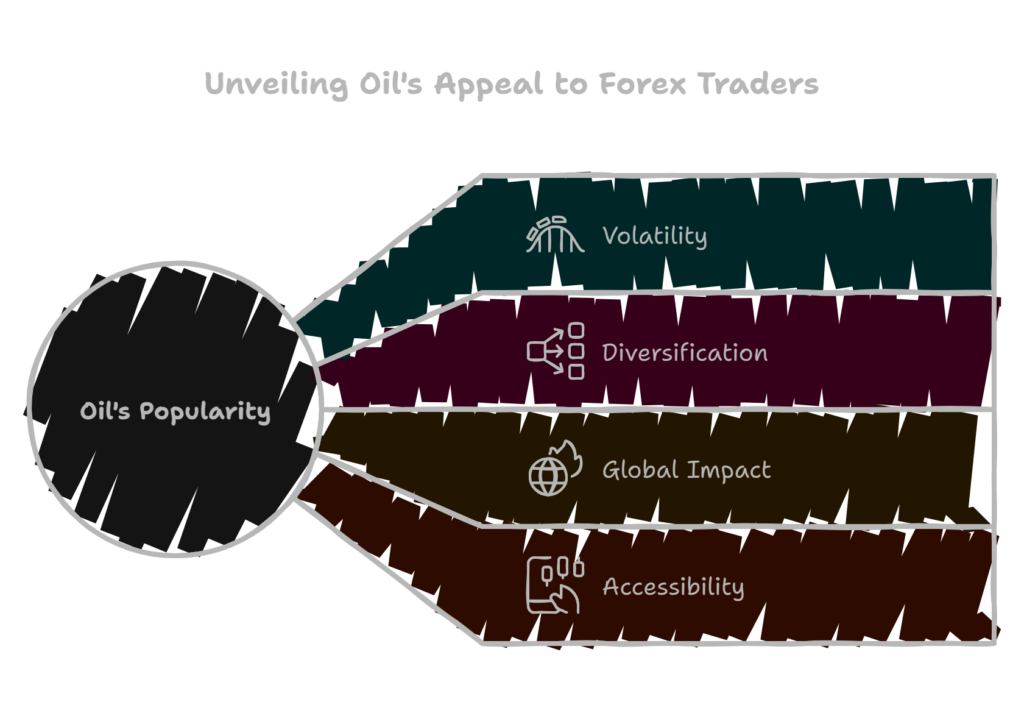
There are several reasons why oil is becoming increasingly popular among Forex traders:
- Volatility: Oil prices can move dramatically in short periods, creating opportunities for quick profits.
- Diversification: Oil adds a commodity dimension to a currency-based portfolio, reducing dependency on FX pairs alone.
- Global impact: Oil prices are influenced by worldwide events, giving traders a chance to profit from geopolitical news and macroeconomic shifts.
- Accessibility: Modern Forex brokers make oil trading as easy as trading EUR/USD, with transparent platforms and low capital requirements.
Challenges of Oil Trading for Beginners
While oil trading is attractive, it is not without challenges:
- High volatility means profits can be quick but losses can be equally rapid.
- Complex fundamentals: Unlike currencies driven by central banks, oil is influenced by OPEC decisions, weather conditions, wars, and global demand.
- Leverage risks: The same leverage that boosts profits can also magnify losses if not managed carefully.
This is why education and proper risk management are critical for anyone engaging in oil trading in the Forex market.
Conclusion of Part 1
Oil trading in the Forex market is more than just speculation on a commodity; it is a window into the dynamics of the global economy. By understanding the fundamentals of oil, its link to currencies, and its role in global trade, Forex traders can open up a new world of opportunities.
Question to consider: If a trader wants to add oil to their Forex portfolio, should they focus more on technical chart analysis or on global fundamental factors such as OPEC decisions and geopolitical risks?
Part 2: Strategies, Tools, and Risk Management in Oil Trading in the Forex Market
In the first part, we introduced the basics of oil trading in the Forex market, highlighting why oil is such a powerful instrument for diversification and speculation. Now, it’s time to dive deeper into the strategies, tools, and risk management techniques that traders must understand in order to succeed.
Oil is one of the most volatile assets in the global economy, which means great opportunities but also significant risks. The key to long-term success lies in applying the right trading strategies, choosing the right instruments, and practicing modern risk management.
Fundamental Analysis in Oil Trading
Unlike currency pairs that are largely influenced by central banks and macroeconomic indicators, oil prices are heavily tied to global supply and demand factors. Fundamental analysis is therefore crucial for anyone serious about oil trading in Forex.
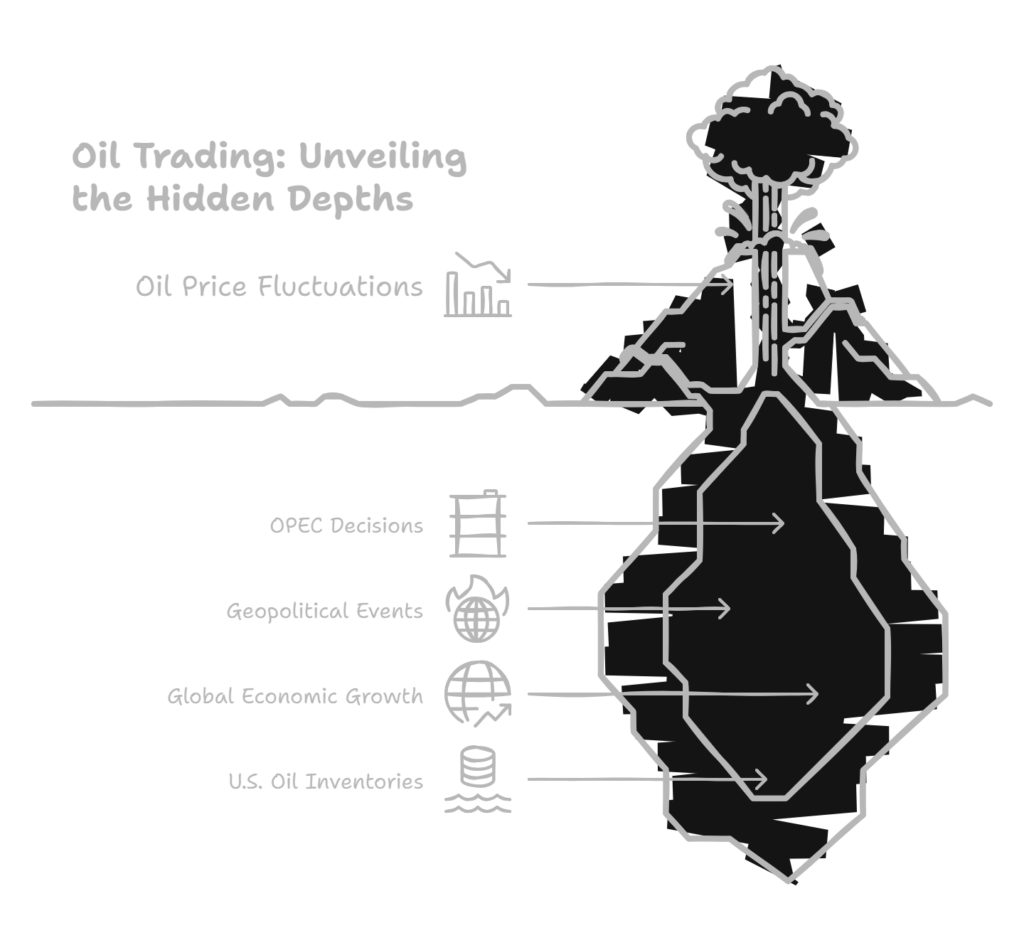
1. OPEC and OPEC+ Decisions
The Organization of the Petroleum Exporting Countries (OPEC) plays a central role in controlling oil supply. When OPEC announces production cuts, oil prices typically rise; when they increase supply, prices usually fall. Traders who follow OPEC meetings often gain an edge.
2. Geopolitical Events
Oil markets react strongly to geopolitical tensions. Wars in oil-producing regions, sanctions against major exporters, or political instability can send oil prices soaring. Conversely, peace agreements or stability can calm markets.
3. Global Economic Growth
As oil demand is closely linked to economic activity, GDP growth or slowdown in countries like China, the U.S., or Europe has a direct effect on oil demand — and therefore prices.
4. U.S. Crude Oil Inventories
The weekly U.S. Energy Information Administration (EIA) inventory report is a major driver of short-term oil volatility. Larger-than-expected inventories can push prices down, while lower inventories often push prices up.
Technical Analysis in Oil Trading
While fundamentals explain why oil moves, technical analysis helps traders determine when and where to enter or exit trades.
Key Technical Tools:
- Support and Resistance Levels: Oil often respects key psychological levels such as $70, $80, or $100 per barrel.
- Moving Averages (MA): Trend-following traders often use 50-day and 200-day MAs to identify long-term direction.
- Relative Strength Index (RSI): Measures overbought or oversold conditions.
- MACD (Moving Average Convergence Divergence): Identifies momentum shifts and possible reversals.
- ATR (Average True Range): A volatility indicator crucial for setting stop-loss levels in oil trading.
Trading Strategies for Oil in Forex
1. Trend-Following
Oil tends to create strong, lasting trends after major geopolitical or OPEC decisions. Trend-following strategies aim to ride these waves rather than fight them.
2. Breakout Trading
Given oil’s volatility, breakout strategies around news releases or inventory reports can be profitable. Traders set buy/sell stops around key resistance or support levels.
3. Range Trading
When oil is not trending, it often moves in well-defined ranges. Traders use oscillators like RSI and Stochastic to identify overbought or oversold levels inside the range.
4. Hedging with Oil
Some Forex traders use oil to hedge currency risk. For example, a trader holding a Canadian Dollar long position might also monitor oil prices closely since CAD is highly correlated with crude.
Tools for Oil Trading in the Forex Market
CFDs (Contracts for Difference)
The most popular instrument in Forex platforms for oil trading. Traders speculate on price changes without owning the asset. CFDs are flexible, offer leverage, and are accessible with small capital.
Futures Contracts
Futures allow traders to agree on buying/selling oil at a set price in the future. They are more common in institutional trading but are increasingly accessible through some Forex brokers.
ETFs and Oil Indices
Some Forex brokers provide access to ETFs or indices linked to oil, offering a more diversified approach to oil exposure.
Spot Oil
Certain brokers offer spot contracts that mirror current market prices of oil, though less common than CFDs.
Modern Risk Management in Oil Trading
Oil trading in Forex requires advanced risk management due to the asset’s high volatility.
- Position Sizing
Traders should avoid risking more than 1–2% of their account on any single oil trade. Using volatility-based position sizing ensures that trades align with market conditions.
- Stop-Loss Placement
Stop-loss orders must be set according to volatility (ATR) rather than random pip values. A fixed stop may work in currency trading, but oil’s wider swings demand dynamic stops.
- Controlling Leverage
Brokers often offer high leverage on oil CFDs, but using excessive leverage is one of the fastest ways to blow an account. Conservative use of leverage is critical.
- Risk-to-Reward Ratios
Each trade should aim for at least a 1:2 or 1:3 risk-to-reward ratio. Oil’s volatility makes large moves possible, so chasing small profits while risking large losses is unsustainable.
- Daily and Weekly Loss Limits
Modern risk management involves setting daily/weekly maximum drawdowns. For example:
- Stop trading if daily losses exceed 3%.
- Pause trading for a week if overall drawdown exceeds 10%.
Common Mistakes in Oil Trading
- Overleveraging: Using maximum broker leverage leads to quick wipeouts.
- Ignoring Fundamentals: Treating oil like a currency pair and ignoring OPEC/geopolitics.
- Chasing the Market: Entering trades too late after big moves.
- No Clear Plan: Trading based on emotions instead of a structured system.
Conclusion of Part 2
Strategies, tools, and risk management form the backbone of successful oil trading in the Forex market. A trader who combines solid fundamental knowledge with technical precision and disciplined risk control can harness oil’s volatility for consistent profits.
Question to consider: Should oil traders rely more on disciplined technical systems, or adapt flexibly to fast-changing geopolitical and fundamental conditions when making decisions?
Part 3: Practical Applications, Psychology, and the Future of Oil Trading in the Forex Market
So far, we’ve explored the basics of oil trading in the Forex market and examined the strategies, tools, and risk management methods that traders use. In this final section, we’ll take a step further into practical applications, trader psychology, and future trends. Oil is not just another asset in Forex; it’s a highly emotional market, driven by global politics, supply chains, and speculation. To master it, traders must balance technical skills with mental discipline while also preparing for the future of energy markets.
Practical Applications of Oil Trading in Forex
- Diversifying a Forex Portfolio
Many traders stick exclusively to currency pairs, but adding oil provides exposure to global commodity markets. This diversification can reduce overall risk since oil often behaves differently from major Forex pairs.
Example: While EUR/USD might be moving sideways, oil could be trending strongly due to an OPEC announcement, offering a profitable opportunity.
- Using Oil as a Hedge
Oil is often correlated with certain currencies, particularly the Canadian Dollar (CAD). Traders can use oil as a hedge against their Forex positions:
- Long CAD → also long oil, since higher oil prices support CAD.
- Short CAD → hedge with a short oil position if expecting oil weakness.
This correlation-based strategy is one of the most practical applications of oil trading in the Forex market.
- Event-Driven Trading
Oil reacts sharply to scheduled and unscheduled events. Examples include:
- Weekly U.S. Crude Oil Inventories (EIA Report): Often sparks short-term volatility.
- OPEC Meetings: Can establish medium-term trends.
- Geopolitical Shocks: Attacks, wars, or sanctions can send oil prices soaring or crashing overnight.
Event-driven traders use these opportunities to enter high-probability trades with well-defined risk.
- Long-Term Macro Trading
Some Forex traders take long-term oil positions based on global macroeconomic trends. For instance, during a period of economic expansion, oil demand rises and prices trend upward. This can align with long-term positions in petro-currencies like CAD or NOK.
The Psychology of Oil Trading
Trading oil is as much about mental control as it is about technical skills. Oil’s volatility can trigger extreme emotional responses, and without discipline, traders can quickly blow their accounts.
- Dealing with Volatility
Oil prices often swing 3–5% in a single session. Traders must avoid overreacting to intraday noise and instead stick to their strategy.
- Fear and Greed
- Fear: Traders often exit winning oil trades too early due to fear of reversals.
- Greed: Others overleverage or add to losing trades, hoping oil will “bounce back.”
- Overtrading
Because oil moves so frequently, it tempts traders to overtrade. Successful traders wait for high-quality setups instead of chasing every move.
- Confidence and Discipline
Confidence comes from following a structured plan. Traders who log trades in a trading journal and analyze mistakes are more likely to succeed in oil trading than those who trade impulsively.
The Future of Oil Trading in Forex
The oil market is evolving rapidly. With growing interest in renewable energy and climate change policies, some argue that oil will lose its dominance. However, in the near to medium term, oil will remain one of the most critical commodities in global markets.
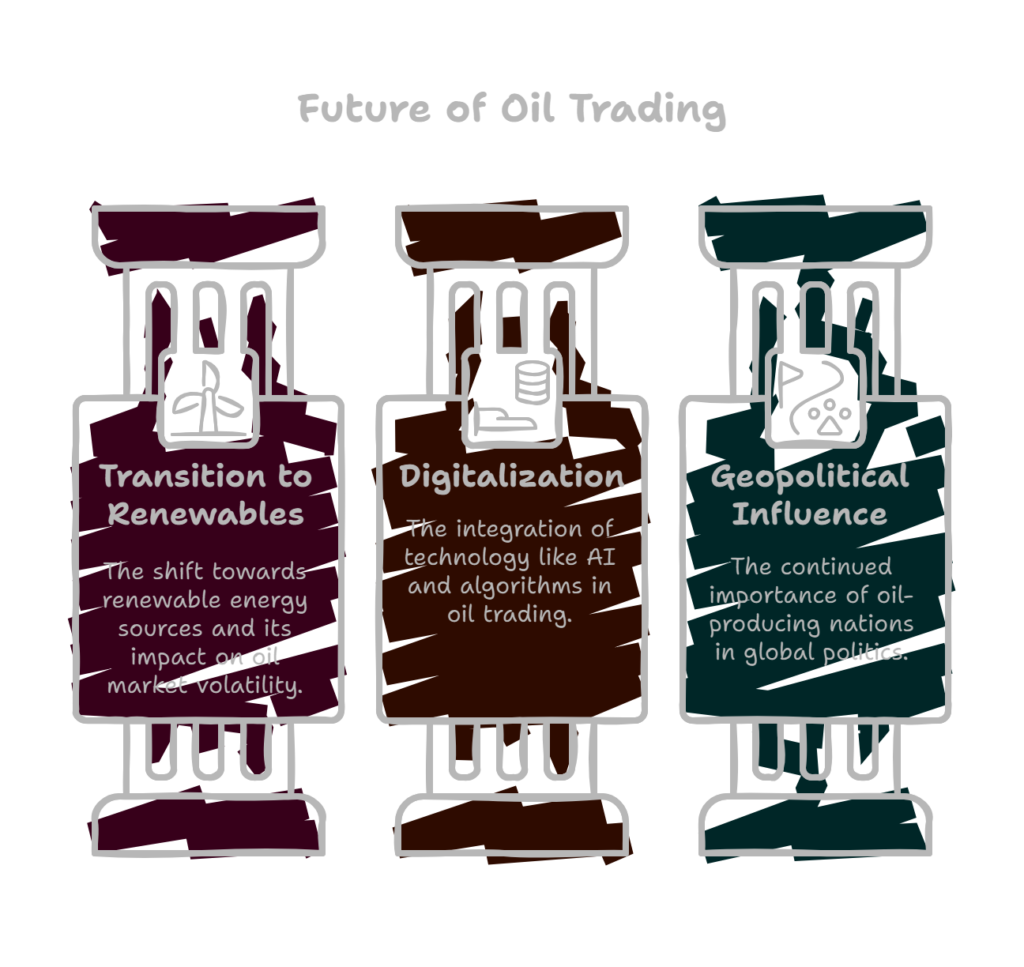
1. Transition to Renewable Energy
While renewable energy is gaining traction, global economies still rely heavily on oil. This transitional phase may actually increase volatility, as supply and demand dynamics become less predictable.
2. Digitalization of Oil Markets
Technological advances, such as algorithmic trading and artificial intelligence, are reshaping how oil is traded. In the future, oil trading in the Forex market will likely become even more data-driven.
3. Continued Geopolitical Influence
Despite the rise of renewables, oil-producing nations will remain key players in global politics. This ensures that oil will continue to be one of the most geopolitically sensitive assets for traders.
Practical Tips for Mastering Oil Trading
- Always follow OPEC announcements and inventory reports.
- Use both fundamental and technical analysis for confirmation.
- Keep risk per trade below 2% of account balance.
- Never trade oil without a stop-loss.
- Maintain a journal to track emotional decisions and learn from them.
Conclusion of Part 3
Oil trading in the Forex market is a unique blend of opportunity and risk. It offers volatility, diversification, and correlation strategies that make it attractive to traders of all levels. However, true success requires more than just technical skills — it requires discipline, psychological strength, and awareness of global events.
As the world transitions to new energy sources, oil will remain a vital part of Forex trading for years to come. Traders who embrace modern strategies, manage risk effectively, and stay ahead of global trends will have the best chance of long-term success.
Final Question: With renewable energy reshaping global markets, will oil continue to be the cornerstone of Forex commodity trading in the next decade, or will traders shift their focus to alternative assets?