AI in Forex: Revolutionizing Currency Trading with Artificial Intelligence
Abstract
The integration of Artificial Intelligence (AI) into the Forex (Foreign Exchange) market has transformed the landscape of currency trading. This article explores the evolution of AI technologies in the Forex domain, including machine learning, deep learning, natural language processing (NLP), and algorithmic trading systems . We will examine how traders and institutions leverage AI to make data-driven decisions, optimize trading strategies, and gain a competitive edge. The article also delves into specific AI-driven tools such as AI Forex robots, neural networks, and predictive models , and evaluates the effectiveness of AI-powered platforms like the pnhrg 5000 and other emerging technologies such as gli (Generative Language Intelligence) in financial forecasting.
1. Introduction
The Forex market , with a daily trading volume exceeding $7 trillion, is the largest and most liquid financial market globally. Traditionally, human traders relied on technical analysis, fundamental indicators, and gut instinct to make trading decisions. However, the sheer volume of data, the speed of market movements, and the emotional component of trading have made manual trading increasingly inefficient.
Enter Artificial Intelligence (AI) — a game-changer in the world of Forex trading. AI systems can analyze vast amounts of historical and real-time data, detect patterns, and execute trades faster and more accurately than any human. As a result, AI is now a cornerstone of modern trading strategies, used by both retail and institutional investors.
2. The Role of AI in Forex Trading
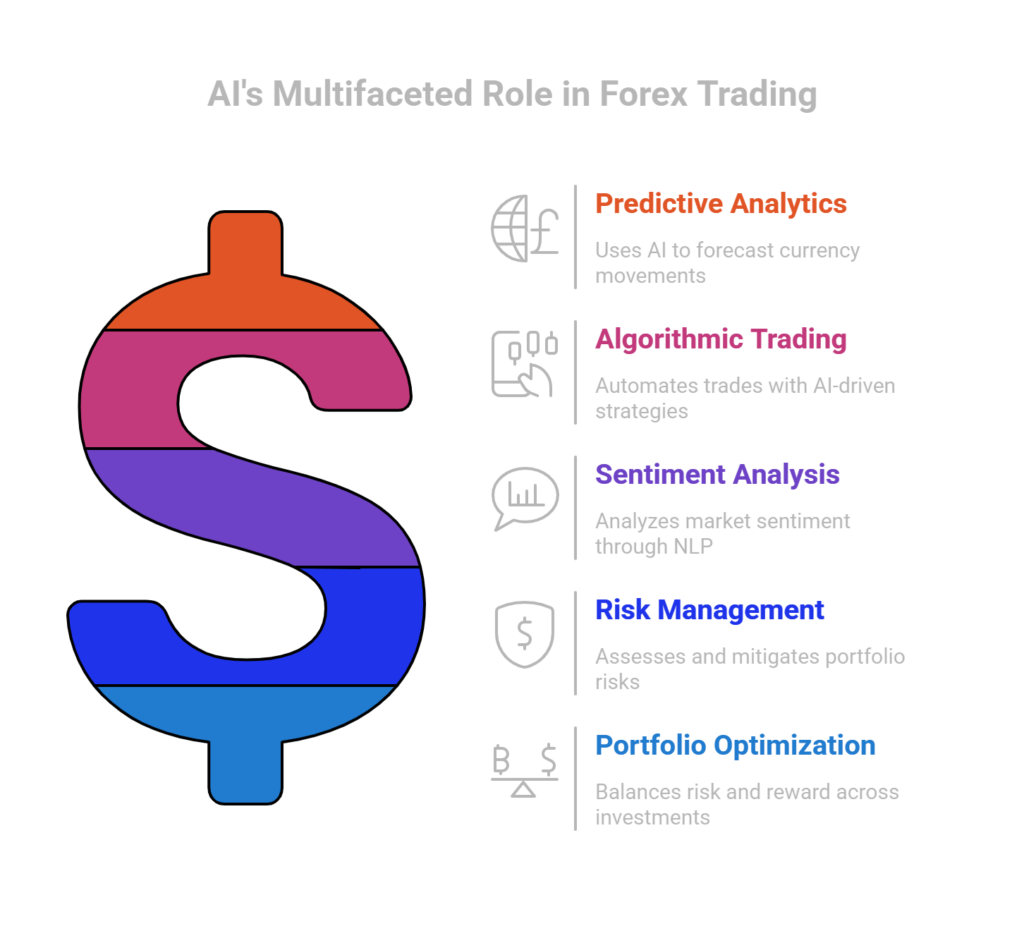
AI plays a multifaceted role in Forex trading, including:
2.1. Predictive Analytics
AI models, especially those based on machine learning algorithms , can predict future currency price movements by analyzing historical data, market trends, and external factors like economic news, geopolitical events, and macroeconomic indicators.
2.2. Algorithmic Trading
Algorithmic trading involves using pre-programmed instructions to execute trades automatically based on certain conditions. AI enhances algorithmic trading by adapting to new data in real-time, adjusting strategies, and optimizing risk management.
2.3. Sentiment Analysis
Natural Language Processing (NLP), a subset of AI, allows systems to analyze news articles, social media posts, and central bank statements to gauge market sentiment. This helps traders anticipate market reactions to events.
2.4. Risk Management
AI systems can assess portfolio risk, simulate market scenarios, and dynamically adjust stop-loss and take-profit levels to protect capital and maximize returns.
2.5. Portfolio Optimization
Using AI, traders can optimize their portfolios by balancing risk and reward across multiple currency pairs, timeframes, and investment strategies.
3. AI Technologies Used in Forex Trading
3.1. Machine Learning (ML)
Machine learning algorithms such as Random Forest, Support Vector Machines (SVM), and Gradient Boosting are used to create predictive models that learn from historical data and improve over time.
3.2. Deep Learning
Deep learning, particularly Recurrent Neural Networks (RNNs) and Long Short-Term Memory (LSTM) networks, excels at processing sequential data like time-series financial data, making it ideal for Forex price prediction.
3.3. Reinforcement Learning
Reinforcement Learning (RL) allows AI systems to learn optimal trading strategies through trial and error, receiving rewards for profitable trades and penalties for losses. This method mimics how humans learn from experience.
3.4. Natural Language Processing (NLP)
NLP is used to extract insights from textual data such as central bank announcements, news headlines, and social media sentiment , which can significantly impact currency values.
3.5. Computer Vision
Some advanced AI systems use computer vision to interpret and analyze charts, candlestick patterns, and visual data to identify potential trading opportunities.
4. AI Forex Robots and Trading Systems
AI Forex robots, also known as Expert Advisors (EAs), are automated trading systems that execute trades on behalf of the user. These bots can run 24/7, monitor multiple currency pairs, and react instantly to market changes.
4.1. pnhrg 5000 – A Case Study
The pnhrg 5000 is an example of an AI-driven Forex trading system that claims to use advanced machine learning models to predict market trends and execute trades with high accuracy. While specific technical details are often proprietary, systems like pnhrg 5000 typically incorporate:
Real-time market data analysis
Historical pattern recognition
Adaptive risk management
Neural network-based prediction models
Automated trade execution
It is crucial for users to backtest such systems and understand the risks involved before deploying them in live markets.
4.2. Other AI Forex Robots
Other popular AI Forex robots include:
Forex Fury
Wall Street Forex Robot
FXProSystem
Quantum AI Trader
These systems vary in complexity and performance, with some offering cloud-based AI processing and others integrating with platforms like MetaTrader 4 (MT4) and MetaTrader 5 (MT5) .
5. Generative Language Intelligence (GLI) in Forex Trading
Generative Language Intelligence (GLI) refers to AI systems that can generate human-like text and insights based on data inputs. In Forex trading, GLI can be used to:
Generate market reports and summaries
Create trading strategies based on news sentiment
Provide real-time commentary and analysis
Assist in chatbots and virtual trading assistants
GLI-powered tools can enhance decision-making by transforming complex data into actionable insights, making them valuable for both novice and experienced traders.
6. Benefits of Using AI in Forex Trading
6.1. Speed and Efficiency
AI systems can process vast amounts of data in milliseconds, enabling high-frequency trading and real-time decision-making.
6.2. Emotion-Free Trading
Unlike human traders, AI does not suffer from emotional biases such as fear or greed, leading to more rational and consistent trading behavior.
6.3. 24/7 Trading
AI can monitor and trade across multiple markets and time zones without fatigue.
6.4. Scalability
AI systems can manage multiple trading accounts and strategies simultaneously, making them ideal for institutional traders.
6.5. Continuous Learning
Machine learning models improve over time as they are exposed to more data, enhancing their predictive accuracy and trading performance.

7. Challenges and Risks of AI in Forex Trading
7.1. Overfitting
AI models may perform exceptionally well on historical data but fail in live markets due to overfitting — where the model becomes too tailored to past data.
7.2. Market Volatility
Forex markets are highly volatile and influenced by unpredictable events, which can challenge even the most advanced AI models.
7.3. Regulatory and Ethical Concerns
The use of AI in trading raises questions about transparency, accountability, and potential market manipulation.
7.4. Dependence on Data Quality
AI systems are only as good as the data they are trained on. Poor data quality or incomplete datasets can lead to inaccurate predictions.
7.5. Technical Failures
Glitches, latency, or connectivity issues can disrupt AI trading systems, potentially leading to significant losses.
8. The Future of AI in Forex Trading
The future of AI in Forex looks promising, with advancements in:
Quantum Computing for faster data processing
Blockchain integration for secure and transparent trading
Edge AI for real-time processing on local devices
AI-powered trading assistants with voice and chat interfaces
Hybrid models combining human intuition with AI insights
As AI continues to evolve, we can expect even more sophisticated trading systems that combine predictive analytics, real-time adaptation, and deep learning to navigate the complexities of global currency markets.
Conclusion
AI has revolutionized Forex trading by enabling faster, more accurate, and emotion-free trading decisions. From machine learning models to AI Forex robots like the pnhrg 5000 , and the integration of GLI (Generative Language Intelligence) for market sentiment analysis, AI is reshaping how traders approach the markets.
However, success with AI in Forex requires a balanced approach — combining technology with sound trading principles, risk management, and continuous learning. As AI technologies mature, they will continue to empower traders, institutions, and even novice investors to navigate the ever-changing world of foreign exchange.