
Risk Management in the Forex Market: A Comprehensive Guide to Controlling Risk and Achieving Trading Success
Part I: Fundamentals and Key Concepts of Forex Risk Management
Introduction
The Forex market, renowned for its high liquidity and 24-hour accessibility, attracts millions of traders worldwide. However, with its potential for significant gains comes an inherent risk profile. Effective risk management is not simply a luxury; it is the foundation upon which successful trading is built. This article provides an in-depth exploration of risk management strategies tailored for the Forex market, covering basic principles, common risks, and fundamental tools designed to protect traders’ capital.
Overview of the Forex Market
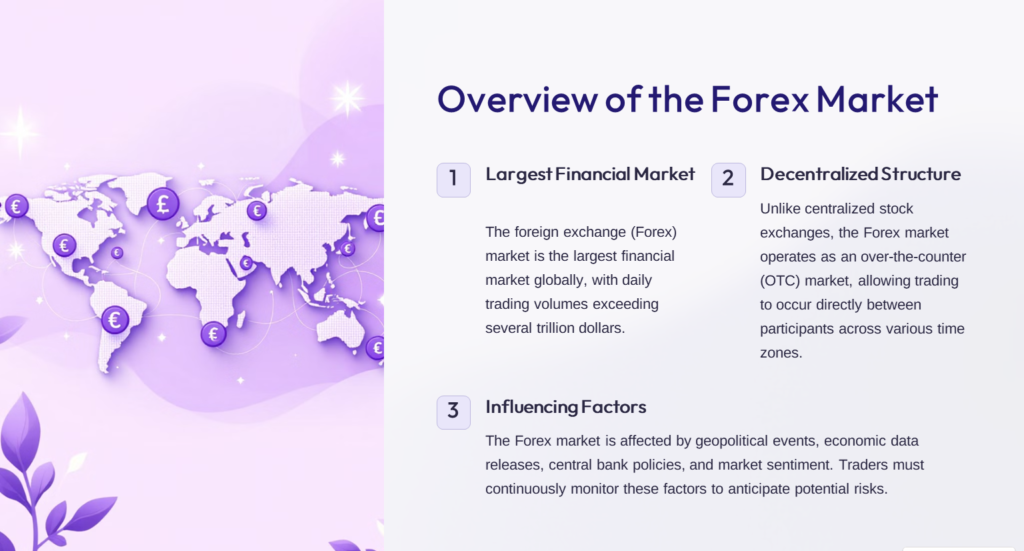
The foreign exchange (Forex) market is the largest financial market globally, with daily trading volumes exceeding several trillion dollars. Unlike centralized stock exchanges, the Forex market operates as an over-the-counter (OTC) market, allowing trading to occur directly between participants across various time zones. This decentralized structure offers flexibility but also introduces unique challenges, such as unpredictable volatility and varying liquidity across currency pairs.
Understanding the environment in which you trade is critical. The Forex market is affected by a myriad of factors including geopolitical events, economic data releases, central bank policies, and market sentiment. Traders must continuously monitor these factors to anticipate potential risks and adjust their strategies accordingly.
Understanding Risk in Forex Trading
Risk in Forex trading is the potential for loss due to market fluctuations, unexpected events, or trading errors. Several types of risks are prevalent:
- Market Risk: The possibility of losses resulting from adverse price movements. Forex markets can be highly volatile, and even small price fluctuations can significantly impact leveraged positions.
- Liquidity Risk: The risk that a trader might not be able to execute an order at the desired price due to insufficient market depth. During periods of high volatility, liquidity can dry up, increasing the risk of slippage.
- Leverage Risk: Forex trading typically involves the use of leverage, allowing traders to control large positions with a relatively small amount of capital. While leverage can amplify profits, it also magnifies losses.
- Operational Risk: This includes risks related to trading errors, system failures, and other technical issues that can disrupt trading activities.
- Psychological Risk: Emotional decision-making and stress can lead to impulsive trades or deviating from a planned strategy, ultimately harming long-term profitability.
A comprehensive understanding of these risks is the first step toward implementing effective risk management strategies.

Principles of Risk Management
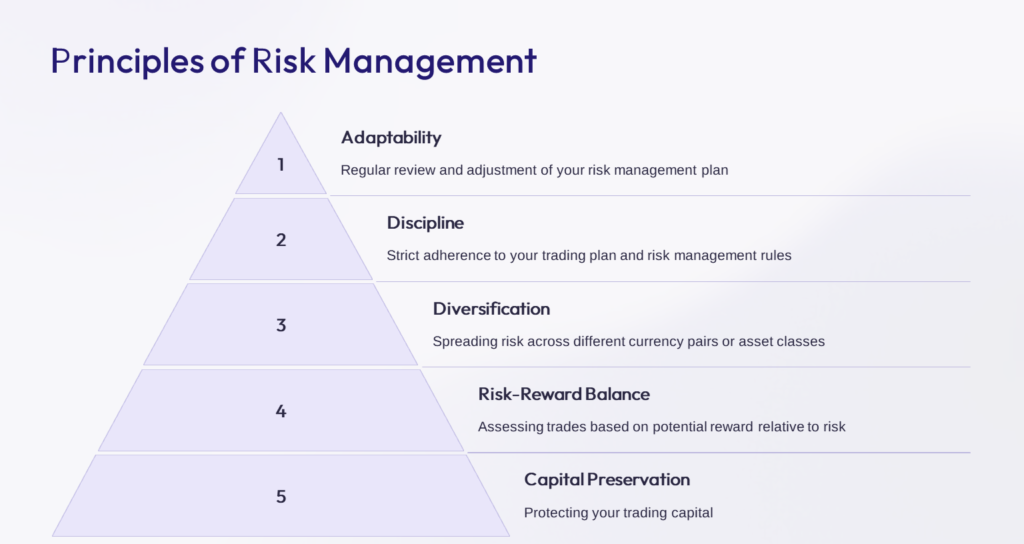
Effective risk management is built upon several core principles:
- Capital Preservation: The primary goal is to protect your trading capital. Losing capital reduces your ability to take advantage of future opportunities.
- Risk-Reward Balance: Every trade should be assessed based on the potential reward relative to the risk taken. A sound risk-reward ratio helps ensure that even if only a fraction of trades are successful, overall profitability is maintained.
- Diversification: Spreading your risk across different currency pairs or asset classes can reduce the impact of a loss in any one position.
- Discipline: Strict adherence to your trading plan and risk management rules is essential. Emotional trading can quickly lead to significant losses.
- Adaptability: The market is dynamic, and strategies must evolve with changing conditions. Regular review and adjustment of your risk management plan are necessary to remain effective.
Key Risk Management Tools and Techniques
There are several practical tools and techniques that traders use to manage risk in Forex trading:
Stop-Loss Orders
Stop-loss orders are one of the most fundamental tools in risk management. A stop-loss order automatically closes a position when the price reaches a predetermined level, limiting potential losses. By setting a stop-loss level based on technical analysis or risk tolerance, traders can prevent emotions from influencing their decisions.
Take-Profit Orders
Take-profit orders are the counterpart to stop-loss orders. They automatically close a position once a specified profit level is reached. This ensures that profits are locked in before market conditions can reverse, which is especially crucial in volatile markets.
Position Sizing
Determining the appropriate size for each trade is critical. Position sizing involves calculating the amount of capital to risk on a single trade, typically expressed as a percentage of your total trading account. For example, risking 1–2% of your account on any given trade can help limit the impact of a loss.
Leverage Management
While leverage can enhance returns, it is a double-edged sword. Effective risk management involves using leverage judiciously, ensuring that it does not expose your account to undue risk. Traders must understand the implications of leverage on their potential losses and manage their positions accordingly.
Hedging Strategies
Hedging involves taking an offsetting position to protect against potential losses in an existing trade. For instance, if you have a long position in a particular currency pair, you might open a short position in a correlated pair to offset potential adverse movements. Hedging can reduce risk but may also limit potential profits.
Risk/Reward Ratio
Calculating the risk/reward ratio for each trade is a fundamental step in planning your strategy. This ratio compares the potential profit of a trade to the potential loss. A common approach is to aim for a risk/reward ratio of at least 1:2, meaning the potential reward is twice the potential risk. This ensures that over time, successful trades will outweigh the losses incurred.
The Role of Market Analysis in Risk Management
Market analysis—both technical and fundamental—plays a crucial role in risk management. Technical analysis helps identify key price levels, trends, and patterns, which can inform stop-loss and take-profit placements. Fundamental analysis, on the other hand, provides insight into economic events and news that could impact market volatility.
By combining both forms of analysis, traders can develop a well-rounded perspective on market conditions and adjust their risk management strategies accordingly. For instance, during major economic announcements, volatility may increase, prompting traders to widen their stop-loss levels or reduce their position sizes to account for the heightened risk.
Conclusion of Part I
In this first part, we have laid the groundwork for understanding risk management in the Forex market. We covered the unique characteristics of the Forex environment, identified the various risks inherent in trading, and discussed essential tools and techniques that help manage these risks. The key takeaway is that successful Forex trading requires a proactive approach to risk management—one that is both disciplined and adaptable. In the next section, we will delve into more advanced strategies and practical implementations that can further refine your approach to managing risk.

Part II: Advanced Strategies and Practical Implementation in Forex Risk Management
Recap of Part I
In the previous section, we explored the fundamentals of risk management in the Forex market. We discussed the various types of risks, such as market, liquidity, leverage, operational, and psychological risks, and reviewed key tools including stop-loss orders, take-profit orders, position sizing, leverage management, and hedging. With this foundation, we are now prepared to examine more sophisticated strategies and real-world applications that can enhance your risk management practices.

Advanced Risk Management Strategies
Diversification Across Currency Pairs
While diversification is a common strategy in portfolio management, its application in Forex trading requires a nuanced approach. Traders should diversify not only by trading different currency pairs but also by considering the correlation between these pairs. For instance, major pairs like EUR/USD and GBP/USD may be highly correlated; therefore, simultaneous exposure to both might not effectively reduce risk. Instead, consider diversifying into less correlated pairs or even other asset classes if your broker permits.
Dynamic Position Sizing
Advanced traders often use dynamic position sizing techniques that adjust the trade size based on current market volatility. This approach, sometimes referred to as volatility-adjusted position sizing, helps ensure that a highly volatile market does not disproportionately impact your portfolio. Tools such as the Average True Range (ATR) can be used to gauge volatility and determine the optimal position size for each trade.
Implementing a Risk Matrix
A risk matrix is a strategic tool that allows traders to evaluate the potential impact and likelihood of various risks. By mapping out different risk scenarios—from minor price fluctuations to extreme market events—traders can assign a probability and impact score to each scenario. This systematic approach can help in designing robust contingency plans and adjusting risk parameters dynamically as market conditions evolve.
Advanced Hedging Techniques
Hedging remains a vital component of risk management, but advanced hedging strategies can go beyond simple offsetting trades. For example, options and futures contracts can be employed to hedge against adverse movements more precisely. Options provide the right, but not the obligation, to buy or sell a currency at a predetermined price, offering a flexible way to protect positions while still allowing for upside potential. Futures, on the other hand, can lock in prices for future transactions, thus minimizing exposure to price fluctuations.
Incorporating Quantitative Models
Many successful Forex traders integrate quantitative models into their risk management frameworks. These models use historical data and statistical techniques to forecast market volatility and assess the risk of a particular trading strategy. By continuously updating these models with real-time data, traders can gain a better understanding of risk exposure and adjust their positions accordingly. Techniques such as Monte Carlo simulations, Value at Risk (VaR) calculations, and stress testing can provide deep insights into the potential impacts of market movements on your portfolio.
Position Sizing and Leverage Management in Practice
The Importance of Position Sizing
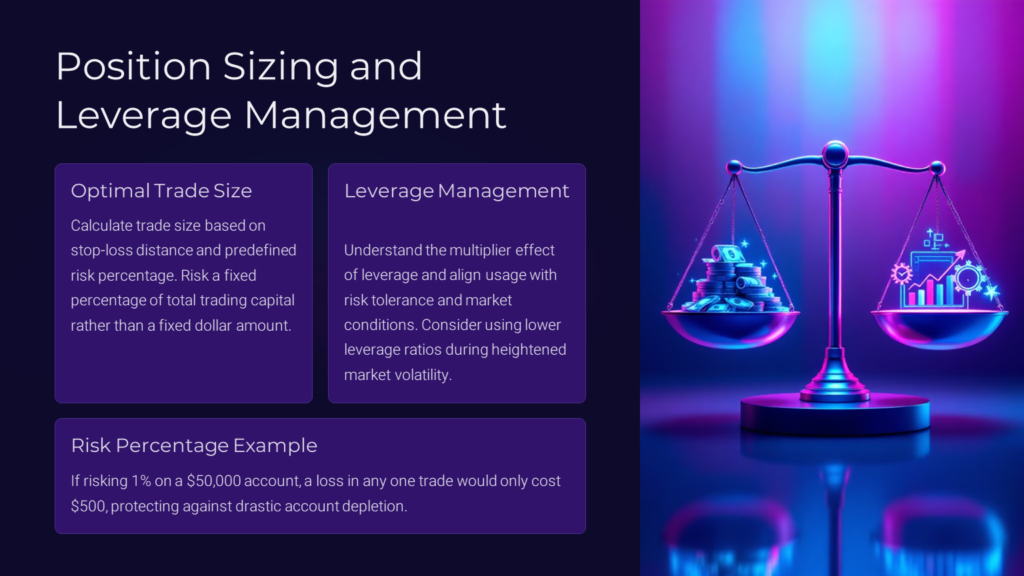
Accurate position sizing is one of the cornerstones of risk management. Rather than risking a fixed dollar amount on each trade, advanced traders often risk a fixed percentage of their total trading capital. This method ensures that no single trade has the potential to deplete the account drastically, especially in periods of unexpected volatility. For example, if you decide to risk 1% of a $50,000 account on each trade, then a loss in any one trade would only cost $500.
Calculating Optimal Trade Size
To calculate the optimal trade size, determine your stop-loss distance—the difference between your entry price and your stop-loss level. Then, using your predefined risk percentage, calculate how many units of the currency you can trade without exceeding that risk. Various online calculators and trading platforms can automate this process, but understanding the underlying math is critical for effective risk management.
Leverage: A Double-Edged Sword
Leverage amplifies both gains and losses. While it allows traders to control large positions with minimal capital, it also means that even small adverse movements can lead to significant losses. Effective leverage management involves understanding the multiplier effect and ensuring that the amount of leverage used aligns with your overall risk tolerance and market conditions. As a best practice, many seasoned traders opt to use lower leverage ratios during periods of heightened market volatility.
The Role of Trading Psychology in Risk Management
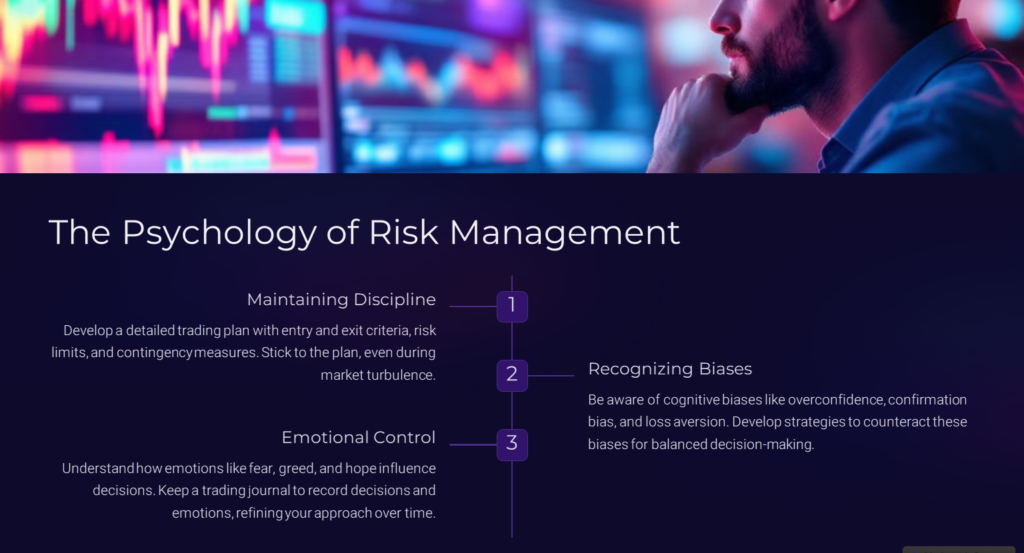
Risk management is not solely about numbers and strategies; it also involves a strong psychological component. Trading psychology—how emotions such as fear, greed, and hope influence decisions—can have a profound impact on risk management. Even the most well-devised strategies can falter if a trader loses discipline or succumbs to emotional impulses.
Maintaining Discipline
Sticking to your trading plan is essential. Develop a detailed plan that includes entry and exit criteria, risk limits, and contingency measures. Once the plan is in place, avoid deviating from it, even during periods of market turbulence. Keeping a trading journal to record decisions and emotions can also help in refining your approach over time.
Recognizing and Mitigating Biases
Cognitive biases such as overconfidence, confirmation bias, and loss aversion can distort judgment. Overconfidence might lead to excessive risk-taking, while loss aversion can prevent a trader from cutting losses in time. Being aware of these biases and developing strategies to counteract them—such as setting predefined exit rules and regularly reviewing your performance—are crucial for maintaining a balanced perspective.
Tools and Technology for Effective Risk Management
In today’s digital age, traders have access to a wide range of tools and technologies that facilitate sophisticated risk management practices. Many platforms offer built-in risk management features, including automated stop-loss and take-profit orders, real-time risk analytics, and customizable alerts.
Trading Platforms and Software
Modern trading platforms come equipped with advanced charting tools, technical indicators, and algorithmic trading capabilities that can help implement complex risk management strategies. For example, some platforms allow you to simulate trades using historical data, which can be invaluable in testing the robustness of your risk management plan before committing real capital.
Algorithmic Trading and Automation
Automated trading systems can help enforce risk management rules without the interference of human emotions. By programming specific parameters—such as stop-loss levels, take-profit targets, and position sizing rules—traders can ensure that their strategy is executed consistently, even during rapid market movements.
Real-Time Data and Analytics
Access to real-time market data and sophisticated analytics tools allows traders to monitor their risk exposure continuously. By analyzing trends, volatility, and other key market metrics in real time, you can adjust your positions and risk parameters dynamically. This level of responsiveness is crucial in the Forex market, where conditions can change rapidly.
Developing a Comprehensive Risk Management Plan
A robust risk management plan should be comprehensive, combining both quantitative techniques and qualitative insights. Here are the key steps to developing your plan:
- Define Your Objectives: Clearly articulate your trading goals and the level of risk you are willing to accept. This includes setting profit targets, maximum acceptable losses, and other performance metrics.
- Analyze Your Risk Tolerance: Understand your personal and financial capacity to withstand losses. This should inform your choices regarding position sizing, leverage, and diversification.
- Establish Clear Rules: Create explicit rules for entering and exiting trades. Include criteria for stop-loss placement, take-profit levels, and conditions under which you might exit a trade prematurely.
- Utilize Technology: Leverage available tools and platforms to automate risk management processes where possible. Automation can help minimize human error and ensure that your risk controls are consistently applied.
- Regularly Review and Adjust: Markets evolve, and so should your risk management plan. Regularly review your performance, assess your strategy’s effectiveness, and adjust your risk parameters as needed.
- Maintain a Trading Journal: Document every trade, including the rationale behind each decision and the outcomes. A detailed trading journal can provide valuable insights over time, helping you identify patterns and refine your approach.
Case Studies and Practical Examples
Example 1: A Conservative Trader’s Approach
Consider a trader who operates with a $100,000 account and has decided to risk no more than 1% on any single trade. For a trade with a stop-loss set at 50 pips from the entry price, the trader calculates the optimal lot size to ensure that a 50-pip move would only result in a $1,000 loss. In addition, the trader sets a take-profit order at a level that represents at least a 1:2 risk/reward ratio, ensuring that the potential profit is double the risked amount. This systematic approach, combined with the use of automated trading tools to enforce stop-loss and take-profit levels, exemplifies disciplined risk management.
Example 2: Hedging in Times of Economic Uncertainty
During periods of economic uncertainty—such as major central bank announcements or geopolitical events—a trader might be concerned about increased market volatility. In such a scenario, the trader may choose to hedge their positions by opening an offsetting trade in a correlated currency pair or by using options to protect their positions. This approach can help mitigate potential losses while still allowing the trader to remain in the market, albeit with a controlled exposure.
Conclusion of Part II
Advanced risk management in the Forex market requires a blend of technical acumen, strategic planning, and psychological discipline. By incorporating dynamic position sizing, quantitative models, and robust hedging strategies, traders can protect their capital and navigate volatile market conditions more effectively. Moreover, the integration of technology—from automated trading systems to real-time data analytics—enhances the ability to manage risk continuously and adapt to changing market conditions.
Ultimately, a comprehensive risk management plan is an evolving framework. It demands ongoing review, adjustment, and a commitment to disciplined execution. By embracing these advanced strategies, traders not only safeguard their investments but also build a resilient foundation for long-term success in the challenging yet rewarding world of Forex trading.