
A Comprehensive Analysis of Technical and Fundamental Analysis in Forex Trading
Introduction
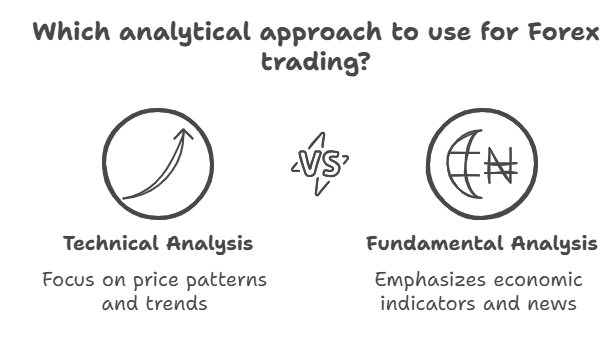
Foreign exchange (Forex) trading is one of the most dynamic and liquid financial markets in the world. Traders employ various methods to analyze market movements and make informed decisions. Among the most prevalent are technical analysis and fundamental analysis. These two approaches differ significantly in methodology but often complement each other to provide a comprehensive trading strategy.
This article delves into the intricacies of technical and fundamental analysis in Forex trading, comparing their methodologies, tools, and applications, and offering insights into their practical integration.
Section 1: Understanding Forex Trading
Forex trading involves the exchange of currencies in pairs, such as EUR/USD or GBP/JPY. The market operates 24 hours a day, five days a week, due to global time zones. Traders aim to profit from currency price movements driven by a myriad of factors, including geopolitical events, economic indicators, and market sentiment.
The volatility and complexity of the Forex market necessitate robust analytical frameworks, of which technical and fundamental analyses are the most widely used.
Section 2: Technical Analysis
What is Technical Analysis?
Technical analysis focuses on historical price data and market trends to predict future movements. It assumes that all market information is reflected in price movements, and patterns often repeat due to market psychology.
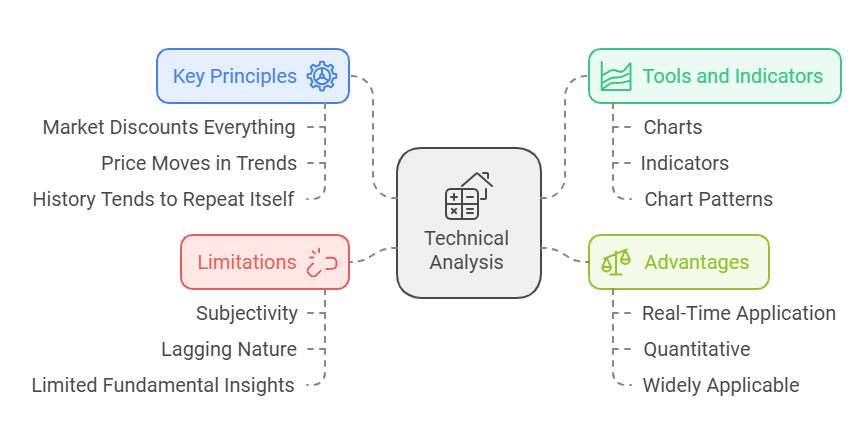
Key Principles of Technical Analysis
- Market Discounts Everything: Prices reflect all known information, including fundamentals.
- Price Moves in Trends: Markets often exhibit trends that traders can exploit.
- History Tends to Repeat Itself: Patterns seen in the past may reoccur due to consistent human behaviors in trading.
Tools and Indicators in Technical Analysis
- Charts:
- Line Charts: Provide a simple overview of price movement.
- Candlestick Charts: Offer detailed information about open, high, low, and close prices.
- Indicators:
- Moving Averages: Smooth out price data to identify trends.
- Relative Strength Index (RSI): Measures momentum to determine overbought or oversold conditions.
- Bollinger Bands: Indicate market volatility and potential reversal points.
- Chart Patterns:
- Head and Shoulders: Signals a trend reversal.
- Double Top/Bottom: Indicates a potential reversal.
- Triangles: Suggest continuation or reversal depending on the breakout direction.
Advantages of Technical Analysis
- Real-Time Application: Offers immediate insights for short-term trading.
- Quantitative: Provides clear entry and exit points based on data.
- Widely Applicable: Useful across different time frames and assets.
Limitations of Technical Analysis
- Subjectivity: Patterns can be interpreted differently.
- Lagging Nature: Indicators often rely on past data, making them reactive rather than predictive.
- Limited Fundamental Insights: Ignores macroeconomic and geopolitical factors.
Section 3: Fundamental Analysis
What is Fundamental Analysis?
Fundamental analysis evaluates the intrinsic value of a currency by examining economic indicators, geopolitical events, and monetary policies. It aims to determine whether a currency is undervalued or overvalued.
Key Factors in Fundamental Analysis
- Economic Indicators:
- Gross Domestic Product (GDP): Measures economic health.
- Employment Data: Indicates economic activity and consumer spending potential.
- Inflation Rates: Reflect purchasing power and influence central bank policies.
- Central Bank Policies:
- Interest Rates: Higher rates attract foreign investment, boosting currency value.
- Quantitative Easing (QE): May weaken a currency by increasing money supply.
- Geopolitical Events:
- Political instability or trade agreements can significantly impact currency values.
- Market Sentiment:
- Surveys and sentiment indicators gauge trader confidence and expectations.
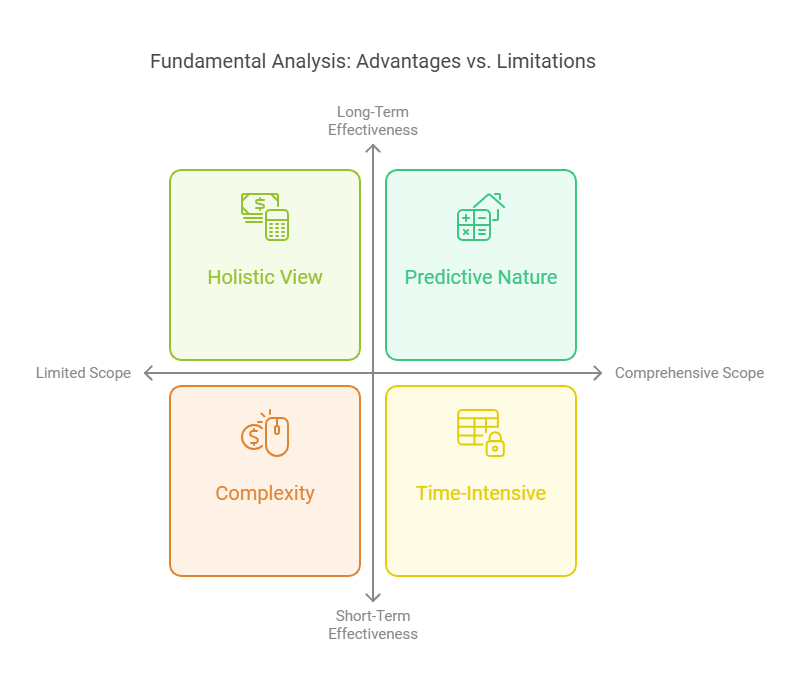
Advantages of Fundamental Analysis
- Holistic View: Considers macroeconomic and geopolitical factors.
- Long-Term Insights: Provides a deeper understanding of currency valuation.
- Predictive Nature: Anticipates market reactions to upcoming data releases or events.
Limitations of Fundamental Analysis
- Complexity: Requires extensive knowledge of economics and global events.
- Time-Intensive: Gathering and interpreting data can be laborious.
- Less Effective for Short-Term Trading: Focuses more on long-term trends.
Section 4: Comparing Technical and Fundamental Analysis
Aspect | Technical Analysis | Fundamental Analysis |
Focus | Price patterns and market trends | Economic and geopolitical factors |
Time Horizon | Short-term to medium-term | Medium-term to long-term |
Data Sources | Charts and technical indicators | Economic reports, central bank policies |
Ease of Learning | Relatively straightforward | Requires deeper knowledge |
Applicability | Works in all market conditions | Better for stable market environments |
Predictive vs. Reactive | Reactive (based on past data) | Predictive (based on future expectations) |
Section 5: Integrating Technical and Fundamental Analysis
While technical and fundamental analyses have distinct approaches, combining them can enhance trading strategies. This integrated approach allows traders to make more informed decisions.
How to Combine Both Approaches
Use Fundamentals to Identify Trends:
- Analyze economic data to determine the long-term direction of a currency pair.
Apply Technical Analysis for Entry and Exit Points:
- Use charts and indicators to fine-tune the timing of trades within the broader fundamental framework.
Monitor Sentiment:
- Combine fundamental sentiment (e.g., consumer confidence reports) with technical sentiment (e.g., RSI levels).
Hedge Risks:
- Use fundamental analysis to understand potential risks and technical analysis to place stop-loss orders.
Example of Combined Analysis
- A trader anticipates a rate hike by the Federal Reserve, suggesting USD strength (fundamental insight).
- The trader identifies a bullish trend in USD/JPY and uses a moving average crossover for entry (technical insight).
Section 6: Practical Tips for Forex Traders
- Stay Informed:
- Keep up with global news and economic calendars.
- Backtest Strategies:
- Test technical setups against historical data while considering fundamental triggers.
- Risk Management:
- Use stop-loss orders and position sizing to manage risks effectively.
- Continuous Learning:
- The Forex market evolves, and staying updated with both technical tools and economic theories is crucial.
Conclusion
Technical and fundamental analyses are indispensable tools in Forex trading. Each has its strengths and limitations, but when used together, they provide a comprehensive framework for understanding market dynamics. Technical analysis offers precision in timing, while fundamental analysis provides depth in valuation.
Mastering these approaches requires practice, discipline, and continuous learning. By integrating both methods, traders can better navigate the complexities of the Forex market and enhance their chances of success.