The Impact of War on Financial Markets
Introduction
Geopolitical conflicts have always played a critical role in shaping the global economic landscape. When war breaks out, the ripples are felt far beyond the battlefield—across stock exchanges, commodity markets, currency trading platforms, and investor sentiment worldwide. The impact of war on financial markets is profound, multifaceted, and often unpredictable. Investors become risk-averse, governments recalibrate fiscal policies, and central banks face new challenges in maintaining monetary stability.
In this article, we’ll explore how different types of financial markets respond to warfare and geopolitical tensions, drawing lessons from historical and contemporary conflicts. From the oil price shocks during the Gulf War to the global sell-offs during Russia’s invasion of Ukraine, markets react to war in ways that reveal the fragility and interdependence of modern economies.
Historical Background: War and Markets
Historically, wars have been both destructive and transformative. The World Wars in the 20th century not only reshaped political borders but also changed the global financial order. During World War I and II, stock markets often suspended trading altogether in some countries due to extreme uncertainty and panic. Conversely, wartime production and government spending led to economic booms in certain sectors, like defense manufacturing.
The Cold War, while not a direct armed conflict between superpowers, created long-term uncertainty in international relations, which frequently triggered short-term market volatility. Events such as the Cuban Missile Crisis, Vietnam War, and Korean War all had measurable financial consequences. Each conflict had a unique effect depending on its duration, geography, global involvement, and the types of assets involved.
The Modern Landscape: Recent Wars and Financial Repercussions
1. Russia-Ukraine Conflict (2022–Present)
Perhaps the most significant modern example of the impact of war on financial markets is the Russia-Ukraine conflict. When Russian troops invaded Ukraine in February 2022, global markets immediately responded. Stock indices like the S&P 500 and the FTSE 100 dipped as investors feared prolonged global instability. Meanwhile, oil and natural gas prices surged to multi-year highs due to fears of supply disruption, especially in Europe which heavily depended on Russian energy exports.
The Russian Ruble experienced extreme volatility, and sanctions by Western nations led to a freeze on billions of dollars in Russian assets. Cryptocurrencies such as Bitcoin saw increased usage within Russia and Ukraine, acting as alternative stores of value during banking restrictions.
2. Middle East Conflicts
Ongoing tensions in the Middle East, especially involving countries like Israel, Iran, and Syria, often trigger volatility in oil markets. The impact of war on financial markets in these regions is particularly pronounced in the energy sector. When armed conflict threatens major oil-producing regions, crude oil futures typically spike as traders price in the risk of disrupted supply.
For instance, the drone attack on Saudi Aramco oil facilities in 2019 briefly disrupted 5% of the world’s oil supply and led to a 20% jump in oil prices overnight. Even rumors of escalation in the Strait of Hormuz, a critical chokepoint for oil transportation, can send shockwaves across commodity exchanges.
Asset Classes Affected by War
a. Stock Markets
Equity markets are often the first to respond to war-related news. During the initial stages of conflict, investors typically react with fear, leading to sell-offs and increased volatility. However, the long-term effects vary. Defense companies like Lockheed Martin or Raytheon often see a boost in stock prices during war periods, while tourism, airline, and consumer discretionary stocks may plummet.
In the 2022 Ukraine conflict, defense stocks surged while technology and growth stocks declined as capital shifted to “safer” assets.
b. Gold and Precious Metals
Gold is often dubbed the ultimate “safe-haven” asset. During times of geopolitical uncertainty, gold prices usually rise as investors look for protection against inflation and currency devaluation. The impact of war on financial markets is clearly reflected in the price trajectory of gold, which surged above $2,000 per ounce during the early phases of the Ukraine war and the COVID-19 pandemic.
Silver, platinum, and other precious metals may also benefit, but gold remains the primary barometer of global investor anxiety.
c. Oil and Energy
War impacts the energy market primarily through supply chain disruption. When oil-producing nations are involved in conflict, or when major shipping lanes are threatened, the immediate reaction is a spike in prices. This, in turn, increases inflation globally and forces central banks to adjust interest rates more aggressively.
d. Forex (Currency Markets)
Currency markets are highly sensitive to political risk. The U.S. Dollar typically strengthens during global crises due to its status as the world’s reserve currency. On the other hand, currencies from emerging markets or countries near the conflict zone often suffer sharp declines.
During the Russia-Ukraine war, the Ruble collapsed initially but later recovered with strict capital controls imposed by the Kremlin. The Euro also faced pressure due to Europe’s energy dependency on Russia.
e. Cryptocurrencies
Digital assets have recently entered the conversation around war and finance. Bitcoin and other cryptocurrencies can offer an alternative for transferring and storing wealth when traditional banking systems are compromised. During recent conflicts, some populations turned to crypto as a lifeline, although its volatility still makes it a double-edged sword.

Psychological and Behavioral Impact on Markets
War triggers fear, which is one of the most powerful market drivers. Behavioral finance studies suggest that during uncertain times, investors often overreact, leading to extreme price swings. Panic selling, herd behavior, and loss aversion dominate trading activity. This is further amplified by media coverage and social media, which can accelerate the spread of fear or optimism.
Algorithms used by institutional traders may also respond to keywords like “invasion” or “missile strike,” causing automated sell-offs or buy orders, depending on sentiment analysis.
The Role of Central Banks and Governments
In times of war, governments often ramp up spending on defense, which can stimulate certain parts of the economy while increasing fiscal deficits. Central banks face the dual challenge of maintaining price stability while supporting economic growth. For example:
- The Federal Reserve may delay interest rate hikes during wartime to avoid further financial stress.
- Governments may issue more war bonds to raise capital, thereby influencing bond yields and interest rates.
- Trade sanctions and embargoes can significantly alter currency exchange dynamics and global supply chains.
Investment Strategies During Conflict
Some investors follow defensive strategies during wartime, such as:
- Shifting portfolios toward gold, cash, or U.S. Treasury bonds.
- Reducing exposure to emerging markets or high-risk assets.
- Investing in defense, cybersecurity, and energy companies.
Others may seek contrarian opportunities, buying undervalued assets during the dip caused by initial panic, betting on a recovery post-conflict. However, these strategies carry high risk and require deep geopolitical insight.
Globalization and War: A Complex Web
In an interconnected global economy, the effects of war are no longer contained to regional markets. A missile strike in one country can cause a ripple effect across global supply chains, commodity prices, and investor confidence. For instance:
- A conflict in Taiwan could severely impact the global semiconductor supply.
- Tensions in the South China Sea may affect shipping routes for trillions of dollars in goods.
This interdependency means that the impact of war on financial markets is now a global phenomenon, not a localized event.
Interim Conclusion
The financial world is intrinsically linked to geopolitics. Wars, whether small or large, conventional or hybrid, short-term or prolonged, introduce variables that can dramatically alter the trajectory of markets. While some assets benefit from conflict, most markets experience increased volatility and uncertainty.
Understanding the nuances of how markets behave during geopolitical crises is essential for investors, policymakers, and businesses alike. Risk management, diversification, and geopolitical awareness are no longer optional—they are critical tools for survival in today’s world.
Continuation: Deep Dive into Sectoral Impact and Case Studies
While the first part of this article laid out the general impact of war on financial markets, this part will delve deeper into specific sectors, case studies, and strategic implications for investors, governments, and institutions.
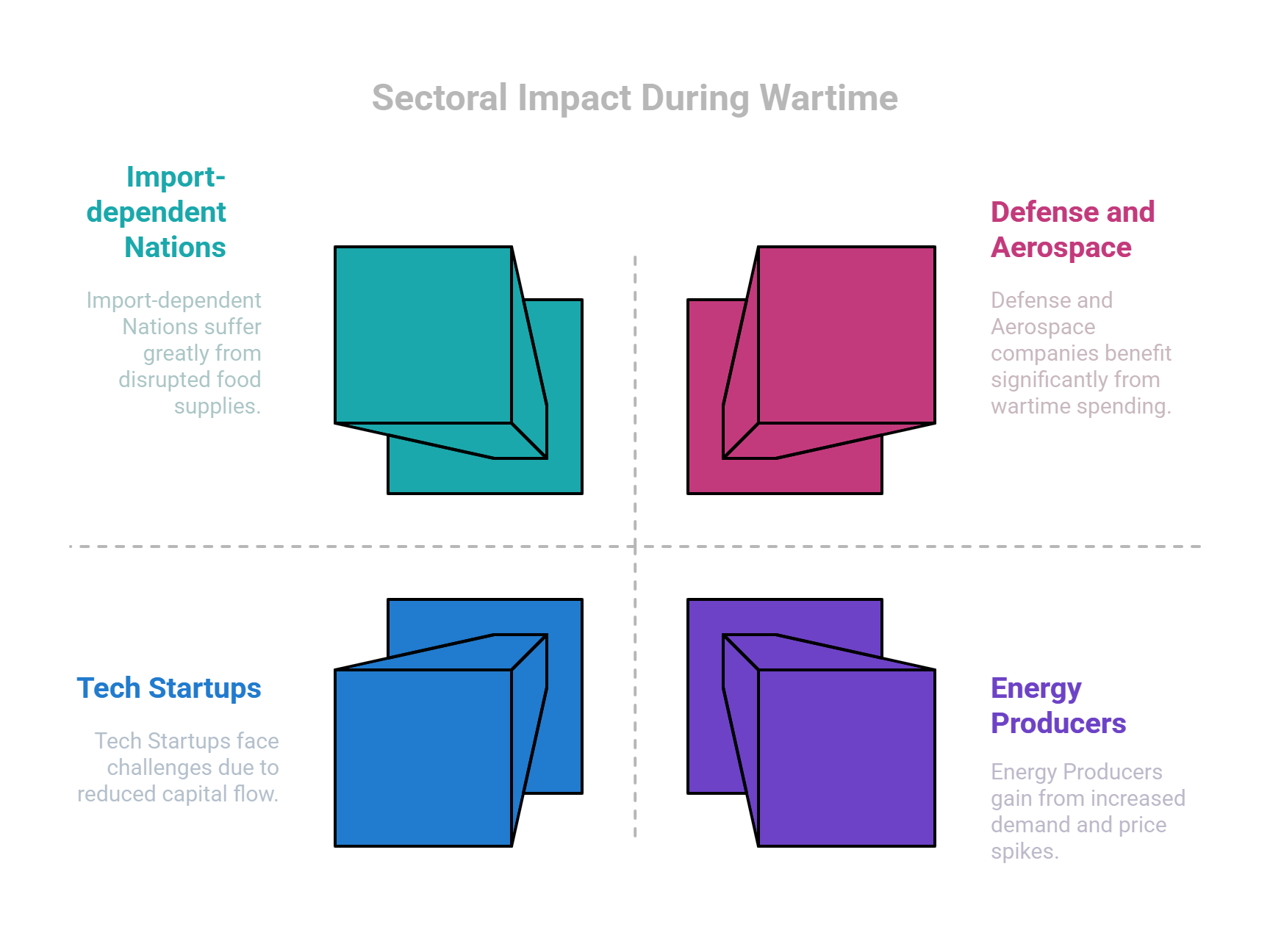
Sectoral Breakdown: Winners and Losers During Wartime
War does not affect all industries equally. Some sectors experience booms, while others face immediate contraction or even collapse.
1. Defense and Aerospace
The most obvious beneficiaries of armed conflict are defense and aerospace companies. Increased government spending on weapons, vehicles, surveillance, and military logistics results in soaring demand for defense contractors.
- Examples: Lockheed Martin, Northrop Grumman, BAE Systems
- Stock Performance: These companies often outperform the broader market during wartime, especially when major defense budgets are announced.
2. Energy and Utilities
Wars that affect oil-rich regions or global shipping routes cause price spikes in crude oil and natural gas. Utility companies may benefit indirectly due to increased energy demand or government subsidies during energy crises.
- Winners: Energy producers, oil field services, LNG exporters
- Losers: Airlines, logistics companies, and industries dependent on cheap energy
3. Agriculture and Food Security
Conflict zones disrupt food production and export. For example, the war in Ukraine—a major exporter of wheat, corn, and sunflower oil—created global shortages and spiked food prices.
- Winners: Agribusiness, fertilizer companies, alternative producers
- Losers: Import-dependent nations, food processing industries
4. Technology and Cybersecurity
Modern warfare often involves cyberattacks on financial institutions, government infrastructure, and corporations. This has led to a rise in demand for cybersecurity solutions and resilient digital infrastructure.
- Winners: Cybersecurity firms like Palo Alto Networks, CrowdStrike
- Losers: Tech startups reliant on capital flow or vulnerable to cyber threats
5. Insurance and Reinsurance
War risk impacts the insurance industry severely. Travel insurance, cargo insurance, and political risk insurance all see increased claims or revised pricing.
Case Study 1: The Gulf War (1990–1991)
The Iraqi invasion of Kuwait sent global oil prices soaring. The Dow Jones Industrial Average dropped significantly in the first few days of the conflict. Gold surged, and bond yields fell as investors sought safer assets.
However, after the U.S.-led coalition’s success and swift conclusion of the war, markets rebounded. This scenario demonstrated the classic “sell the rumor, buy the fact” behavior in financial markets.
Key Lessons:
- Initial panic is common, but markets tend to stabilize after clarity.
- Timing and duration of conflict matter more than geopolitical location.
Case Study 2: Russia-Ukraine War (2022–Present)
This war had a multi-dimensional impact:
- Commodities: Natural gas and wheat prices exploded in early 2022.
- Currencies: The Ruble depreciated significantly before stabilizing through capital controls.
- Markets: European indices dropped sharply; defense stocks rallied.
- Crypto: Ukraine raised millions in crypto donations to fund its defense, setting a new precedent in wartime finance.
Long-term implications:
- A shift away from reliance on Russian energy in Europe
- Accelerated investments in renewable energy and energy independence
- Reshaped alliances affecting international trade and capital flows
The Role of Media and Information Warfare
Information is a critical asset during war. News headlines, real-time updates, and propaganda can significantly move markets. Misinformation or fake news can trigger panic selling or unjustified rallies.
- Algorithmic trading systems often react to keywords in headlines, creating automated buy/sell waves.
- Social media amplifies volatility, especially in crypto and equity markets.
This layer of information warfare has become a new front in market manipulation and investor sentiment shaping.
ESG Investing in Times of War
Environmental, Social, and Governance (ESG) investing faces new challenges during wartime:
- Defense stocks, traditionally excluded from ESG portfolios, are being reconsidered due to their “national security” utility.
- Companies operating in aggressor states may face divestment pressures, affecting their valuation.
- Supply chain ethics, such as sourcing from war zones, are under scrutiny.
Some investors now face ethical dilemmas: Should they support defense stocks? How should they factor in sanctions and humanitarian impact?
Safe Havens in Geopolitical Crisis
Investors traditionally seek “safe havens” during periods of high geopolitical risk:
Asset | Typical Reaction to War |
Gold | Rises |
U.S. Dollar (USD) | Strengthens |
Swiss Franc (CHF) | Gains as neutral asset |
U.S. Treasury Bonds | Demand increases |
Real Estate | Stable in safe regions |
Modern additions like Bitcoin are more unpredictable. Some view it as digital gold, while others see it as too volatile during real-world conflict.
Central Banks and Interest Rate Policy
War often affects inflation, growth, and unemployment simultaneously—creating policy dilemmas for central banks.
For example:
- If war-driven oil prices spike, inflation rises.
- If economic activity slows due to uncertainty, central banks may be reluctant to raise interest rates.
This policy paradox can lead to delayed action or conflicting signals to markets, which amplifies volatility.
War Bonds and Government Debt
During large-scale wars, governments often issue war bonds to fund military expenditure. This leads to:
- Increased national debt
- Long-term inflationary risks
- Potential crowding out of private investment
Countries with higher credit ratings may fare better, but emerging markets often suffer from rising yields and capital flight.
Currency Wars and Economic Weaponization
War is not always fought with guns and missiles—economic warfare is now a dominant strategy:
- Sanctions: Target specific companies, banks, or individuals (e.g., Russia, Iran)
- Asset freezes: Foreign reserves and private assets seized
- Currency weaponization: Delisting from SWIFT, trade embargoes
These measures send shockwaves across FX markets and can lead to the creation of alternative systems (e.g., China-Russia SWIFT alternatives).
Hedging Strategies for Investors
During geopolitical conflict, hedging becomes crucial. Here are common tactics:
- Options and Futures: Used to limit downside risk in equities and commodities
- Currency Hedging: Protects international portfolios from FX swings
- Gold ETFs: Provide safe-haven exposure
- Inverse ETFs or Short Positions: Allow profiting from market downturns
Some institutional investors also turn to tail-risk hedging or volatility trading during high-stress periods.
Long-Term vs. Short-Term Outlook
While the short-term impact of war is often chaotic and negative, long-term effects can vary. For instance:
- Post-WWII reconstruction led to decades of growth in Europe and Japan.
- U.S. defense innovation during wars accelerated tech advancement.
- Wars can lead to policy reform, increased infrastructure spending, or new global alignments.
However, prolonged conflicts like the Syria civil war or Afghanistan invasion can have persistent negative effects with little upside.
Geopolitical Risk Premium
Modern markets now price in what’s known as a geopolitical risk premium—an extra margin of uncertainty applied to valuations. This can lead to:
- Higher cost of capital in conflict-prone regions
- Reduced foreign direct investment (FDI)
- Increased insurance premiums and shipping costs
- Rerouting of trade and manufacturing
This premium is often invisible but very real for investors analyzing international exposure.
Conclusion
The impact of war on financial markets is a complex and ever-evolving phenomenon. As globalization intertwines the fate of nations and economies, conflicts anywhere in the world can have consequences everywhere. Financial markets do not operate in isolation—they absorb, reflect, and often magnify geopolitical tensions.
For investors, it is no longer enough to analyze earnings reports and economic indicators. Understanding geopolitics, military strategy, global alliances, and risk psychology has become essential. In an age where wars are fought not only with weapons but also with data, sanctions, and economic leverage, the battlefield now extends to Wall Street, the City of London, and digital asset exchanges worldwide.
By building diversified portfolios, remaining informed, and applying sound risk management principles, investors can not only survive the uncertainty brought by war—but in some cases, even find opportunities where others see only chaos.