Mastering Forex Trading: The Ultimate Guide to Economic Indicators and Market Trends
Part 1: Understanding Economic Indicators in the Forex Market
Introduction
The forex market is highly sensitive to economic indicators, which provide crucial insights into the health and direction of an economy. Traders, investors, and policymakers closely monitor these indicators to make informed decisions. In this two-part article, we will explore the key economic indicators that influence currency values and market trends.
What Are Economic Indicators?
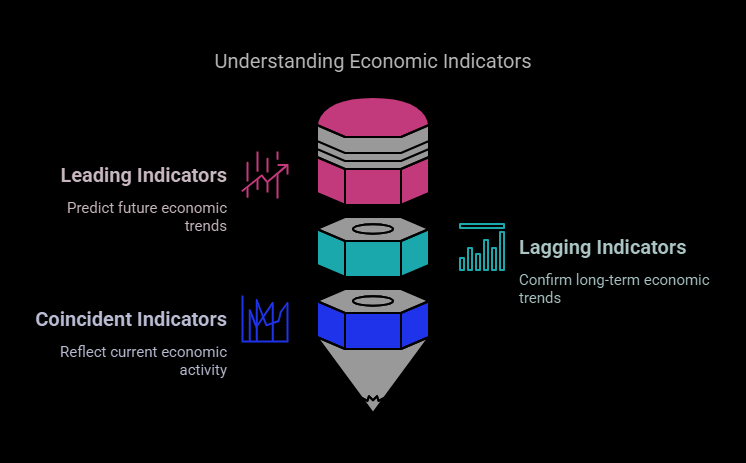
Economic indicators are statistical data points that reflect the overall economic performance of a country. They are typically released by government agencies or independent organizations and are categorized into three main types:
Leading Indicators
These indicators signal future economic trends. Examples include stock market performance, new business startups, and manufacturing orders.
Lagging Indicators
These indicators confirm long-term trends after economic changes have already occurred. Examples include unemployment rates and corporate earnings.
Coincident Indicators
These indicators provide real-time information about economic activity. Examples include GDP growth and industrial production.
Key Economic Indicators in Forex Trading
Several economic indicators have a direct impact on the forex market. Below are some of the most influential ones:
1. Gross Domestic Product (GDP)
GDP represents the total value of goods and services produced by a country within a specific time frame. It is a primary measure of economic strength, with higher GDP growth often leading to a stronger currency.
2. Inflation Rates (CPI & PPI)
Inflation is the rate at which the general level of prices for goods and services rises. The two most important inflation indicators are:
- Consumer Price Index (CPI): Measures the price changes of consumer goods and services.
- Producer Price Index (PPI): Measures the price changes at the wholesale level.
A high inflation rate can erode a currency’s purchasing power, but central banks may raise interest rates to counteract inflation, which can boost the currency.
3. Employment Data (Unemployment Rate & Non-Farm Payrolls)
- Unemployment Rate: A low unemployment rate indicates a strong economy, which can positively affect the currency.
- Non-Farm Payrolls (NFP): A U.S. employment report that significantly impacts the forex market.
4. Interest Rates & Central Bank Policies
Central banks, such as the Federal Reserve (Fed) and the European Central Bank (ECB), influence the forex market through monetary policies. Higher interest rates generally attract foreign investment, increasing demand for a country’s currency.
5. Retail Sales & Consumer Confidence
- Retail Sales: A strong retail sector indicates consumer confidence and economic growth.
- Consumer Confidence Index (CCI): Measures consumer optimism about the economy’s future.
These indicators help traders gauge potential changes in economic conditions and currency movements.

Part 2: Advanced Economic Indicators and Their Role in Forex Trading
Introduction
In the second part of our analysis of economic indicators in forex trading, we will delve into additional critical indicators, their impact on currency markets, and how traders can incorporate them into their strategies for better decision-making. Understanding these indicators allows forex traders to anticipate market movements and develop a robust trading plan.
Additional Economic Indicators Affecting Forex
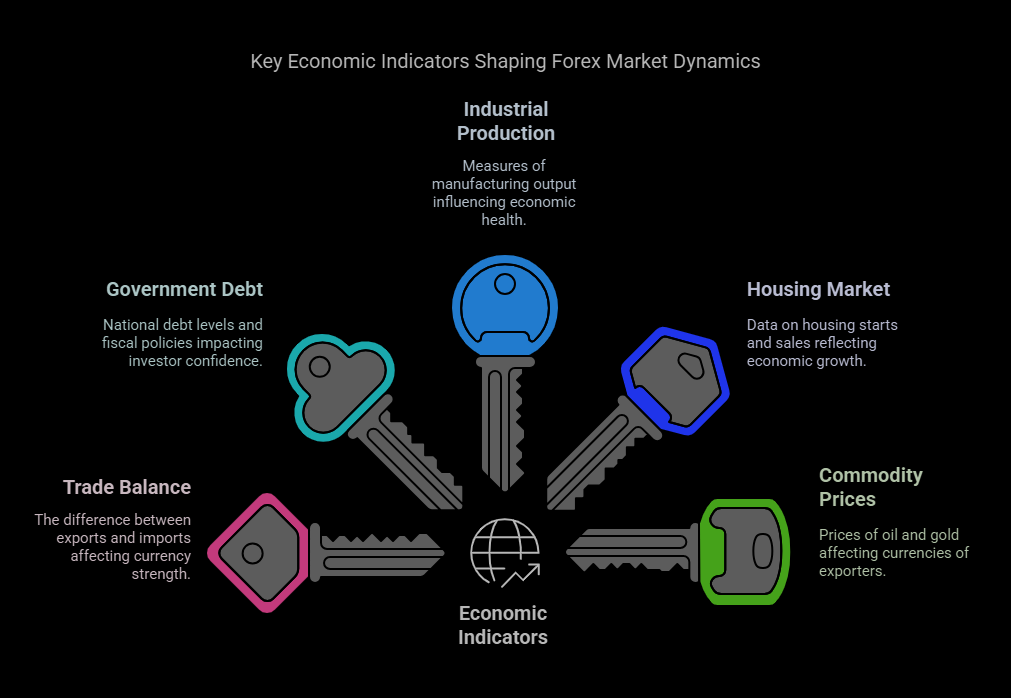
Trade Balance and Current Account
Trade Balance:
The difference between a country’s exports and imports. A trade surplus strengthens a currency, while a trade deficit can weaken it.
Current Account Balance:
Includes trade balance, net income from abroad, and net transfers. A positive current account indicates strong economic health and supports currency value.
Government Debt and Fiscal Policies
- National Debt Levels: High debt can lead to economic instability and lower investor confidence in a currency.
- Budget Deficit: If a country consistently spends more than it earns, it may weaken its currency over time.
Manufacturing and Industrial Production
- Industrial Production Index: Measures output from factories, mines, and utilities.
- Purchasing Managers’ Index (PMI): A forward-looking indicator that gauges business conditions in the manufacturing and service sectors.
Housing Market Data
- Housing Starts and Building Permits: High numbers indicate economic growth, while declines suggest economic slowdowns.
- Existing Home Sales: Reflects consumer confidence and overall economic stability.
Commodity Prices and Their Impact on Forex
- Oil Prices: Affects currencies of major oil exporters like Canada and Saudi Arabia.
- Gold Prices: A safe-haven asset that influences currencies like the U.S. dollar and Australian dollar.
How Traders Use Economic Indicators
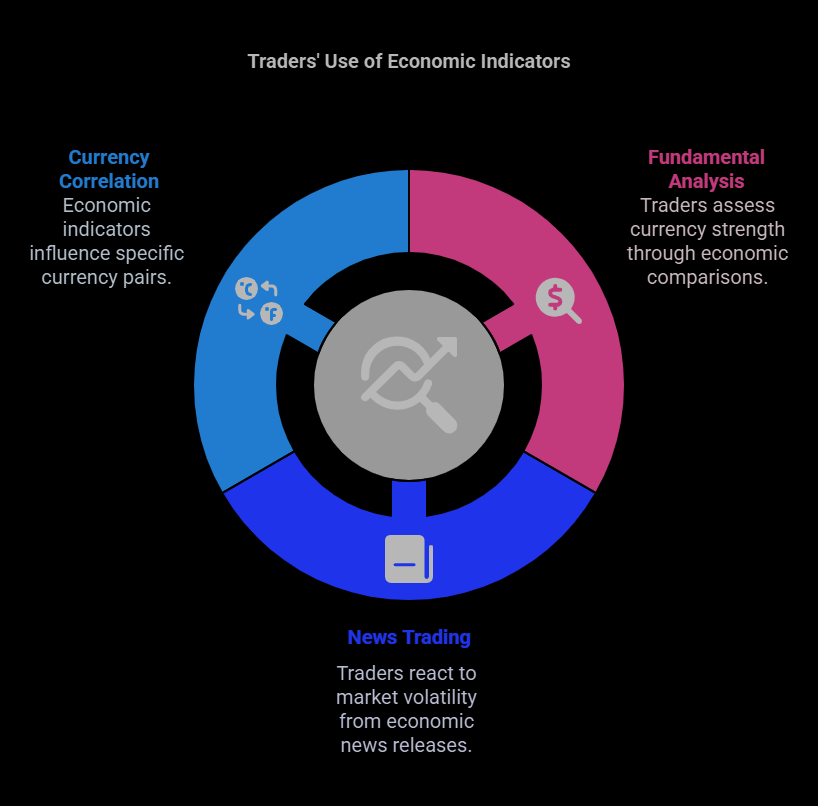
Understanding economic indicators is only the first step; applying this knowledge in trading strategies is crucial. Here’s how traders use these indicators effectively:
1. Fundamental Analysis in Forex Trading
- Fundamental traders analyze economic indicators to determine the strength of a currency.
- They compare the economic health of two countries to decide which currency pair to trade.
2. Economic Calendar and News Trading
- Traders monitor economic calendars for scheduled releases of key indicators.
- High-impact indicators such as GDP, interest rate decisions, and employment data can lead to increased market volatility.
3. Correlation Between Economic Indicators and Currency Pairs
- Some indicators have a direct correlation with specific currency pairs. For example:
- U.S. Non-Farm Payrolls (NFP) → Affects USD pairs like EUR/USD and GBP/USD.
- Oil Prices → Affects CAD pairs like USD/CAD.
- Interest Rate Decisions → Affects JPY pairs due to Japan’s low-interest-rate environment.
Best Practices for Trading Based on Economic Indicators
- Stay Updated: Follow financial news and economic calendars.
- Use Stop Loss Orders: To mitigate risks associated with market volatility.
- Combine Technical and Fundamental Analysis: To get a more comprehensive view of the market.
- Monitor Central Bank Statements: Policy changes can have a massive impact on forex markets.
- Trade with a Plan: Develop a strategy based on economic indicators rather than emotional reactions.
Conclusion
Economic indicators are essential tools in forex trading. They provide insights into a country’s economic health, influencing currency value and market trends. Traders who understand and effectively utilize these indicators can gain a competitive edge in the forex market.By combining knowledge of fundamental indicators with technical analysis and risk management strategies, traders can enhance their decision-making process and maximize profitability in the dynamic forex market.
This concludes our two-part series on economic indicators in forex trading. Whether you are a beginner or an experienced trader, staying informed about these economic indicators will help you navigate the complexities of the forex market with confidence.